


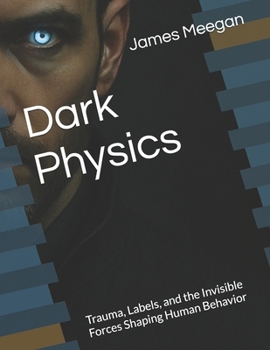
Dark Physics: Trauma, Labels, and the Invisible Forces Shaping Human Behavior

Dark Physics is not a book about pathology.
It is a book about pressure.
When human systems-individuals, families, institutions, and belief structures-are subjected to chronic threat, moral injury, and asymmetric responsibility, they do not simply "break." They reorganize. Boundaries harden. Empathy narrows. Identity compresses. And behaviors once adaptive are retroactively labeled as defects.
Drawing from trauma research, systems theory, moral injury models, sociology of labeling, and the psychology of belief, Dark Physics reframes behaviors commonly called narcissism, bipolarity, emotional coldness, or rigidity as intelligible responses to constraint rather than intrinsic disorder. It introduces a systems-based vocabulary-reactive narcissism, constrained (dark) empathy, loss of moral time, label damage-to explain how survival intelligence is routinely mistaken for pathology.
The book moves deliberately: from symbolic language into formal models, from theory into pattern archetypes, and from individual adaptation into institutional and religious dynamics under fear. It challenges trait-based explanations without rejecting clinical rigor, and critiques authoritarian moral systems without attacking belief itself.
Written for readers who have been mislabeled, clinicians who sense their tools are incomplete, and thinkers uneasy with easy diagnoses, Dark Physics insists on a simple ethical correction:
Before asking what is wrong with a person, ask what their behavior was forced to carry.
This is not a manifesto.
It is a framework.
And once seen, it is difficult to unsee.
Customer Reviews
ThriftBooks ® and the ThriftBooks ® logo are registered trademarks of Thrift Books Global, LLC
