


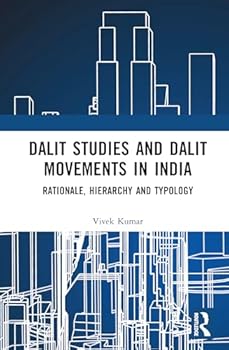
Dalit Studies and Dalit Movements in India: Rationale, Hierarchy and Typology

This volume seeks to provide a philosophical and theoretical foundation for Dalit studies. It begins by formulating a philosophical and theoretical definition of the term 'Dalit', along with its empirical characteristics--structural location; the cumulative and collective nature of exclusion; the temporal history of exclusion; and the evolution and identification of icons and cultural symbols within Dalit society. The volume studies the Dalits through the lens of social mobility; highlights the triple exploitation of Dalit women; presents an epistemic and theoretical framework for evolving a 'Dalit perspective' and its functions to understand social reality from the point of view of Dalit experience; and engages with the different facets of the Dalit movement. Lucid, accessible, and thought-provoking, this book will be of great interest to scholars and researchers of social exclusion and discrimination studies, sociology, law and human rights, and South Asian studies.
Customer Reviews
ThriftBooks ® and the ThriftBooks ® logo are registered trademarks of Thrift Books Global, LLC
