


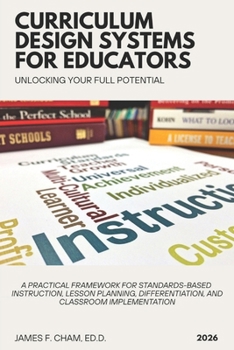
Curriculum Design Systems for Educators: A Practical Framework for Standards-Based Instruction, Lesson Planning, Differentiation, and Classroom Implem

A teacher once reviewed student work after what she believed was one of her strongest lessons.
The lesson was carefully planned. Instruction was clear. Students were engaged and responsive throughout.
But days later, the results told a different story.
Some students had mastered the concept. Others had only partially understood it. Many could not apply what they had just learned.
The lesson had worked in the moment-but not in the learning outcomes.
This is not an isolated experience.
Across education systems:
Students can forget 50-70% of new information within 24 hours without structured reinforcementTeachers make between 1,500-3,000 instructional decisions per dayLess than 50% of teacher time is typically spent on direct instructionLearning outcomes often vary significantly even within the same classroomThe issue is not effort.
It is instructional system design.
A SYSTEMS-BASED APPROACH TO TEACHING
Curriculum Design Systems for Educators introduces a practical, structured framework for designing curriculum, instruction, and assessment as one connected system.
Instead of isolated strategies or reactive lesson planning, this book focuses on how to build instruction that is aligned, consistent, and scalable in real classrooms.
INSIDE YOU WILL LEARN HOW TO: Translate standards into clear learning targetsBuild curriculum maps that support real progressionDesign lesson structures that improve clarity and retentionAlign instruction and assessment into a unified systemDifferentiate instruction without increasing workloadApply UDL in practical classroom settingsUse technology and AI to support instructional designBuild continuous improvement cycles for curriculum refinement
WHO THIS BOOK IS FOR
This book is for:
Teachers seeking structure and clarity in planningInstructional coaches and curriculum designersSchool and district leaders focused on alignmentEducators working with bilingual or diverse learnersProfessionals moving into instructional design rolesWHO THIS BOOK IS NOT FOR
This book is not for readers looking for:
Quick-fix teaching hacksPure theory without classroom applicationScripted lesson plans for every subjectApproaches that ignore real classroom complexityTHE CORE TRANSFORMATION
This book helps you move from:
Reactive lesson planning → Structured instructional systemsInconsistent outcomes → Predictable learning designTeacher overload → Efficient system thinkingTHE CORE IDEA
Better teaching is not about doing more.
It is about designing better systems.
When curriculum, instruction, and assessment are aligned:
learning becomes cleareroutcomes become more consistentteaching becomes more scalableCustomer Reviews
ThriftBooks ® and the ThriftBooks ® logo are registered trademarks of Thrift Books Global, LLC
