


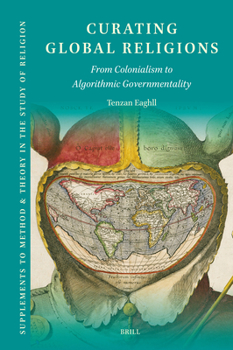
Curating Global Religions: From Colonialism to Algorithmic Governmentality
No Customer Reviews

This book offers a genealogy and critique of "global religions" as a scholarly category. Beginning with competing narratives of 1492 and Columbus, it traces how the notion was curated by figures like Ninian Smart and Mark Juergensmeyer, staged at the 1993 Parliament of World's Religions, and deployed in Buddhist studies scholarship. It culminates in an examination of how religion functions within liberal, neoliberal, and algorithmic modes of governmentality. Drawing on decolonial theory, Foucauldian analysis, and critical religious studies, it argues that global religions is not a neutral descriptor but a tool for organizing, disciplining, and commodifying cultural difference -- and one serving increasingly authoritarian ends.
Format:Hardcover
Language:English
ISBN:9004763031
ISBN13:9789004763036
Release Date:August 2026
Publisher:Brill
Length:246 Pages
Customer Reviews
0 rating
Copyright © 2026 Thriftbooks.com
Terms of Use | Privacy Policy | Do Not Sell/Share My Personal Information | Cookie Policy | Cookie Preferences | Accessibility Statement
ThriftBooks ® and the ThriftBooks ® logo are registered trademarks of Thrift Books Global, LLC
ThriftBooks ® and the ThriftBooks ® logo are registered trademarks of Thrift Books Global, LLC
