


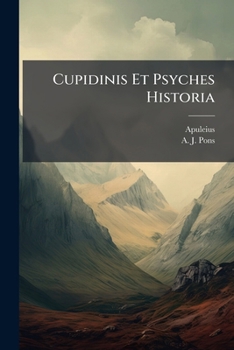
Cupidinis Et Psyches Historia

Cupidinis Et Psyches Historia is a classical work attributed to Apuleius, a Roman writer and philosopher. This enduring tale, part of Apuleius' larger work "Metamorphoses" (also known as "The Golden Ass"), recounts the enchanting love story of Cupid and Psyche. Psyche, a mortal woman of extraordinary beauty, incurs the jealousy of Venus, who commands her son Cupid to make Psyche fall in love with a hideous monster. However, Cupid is struck by Psyche's beauty and instead takes her as his wife, under the condition that she never look upon his face.
Driven by curiosity and the manipulations of her envious sisters, Psyche eventually breaks this condition, leading to trials and tribulations as she seeks to regain Cupid's love. The story explores themes of love, jealousy, trust, and redemption, offering a timeless narrative that continues to captivate readers. This edition allows readers to engage with the original Latin text, preserving the authenticity and literary artistry of Apuleius' work.
This work has been selected by scholars as being culturally important, and is part of the knowledge base of civilization as we know it. This work was reproduced from the original artifact, and remains as true to the original work as possible. Therefore, you will see the original copyright references, library stamps (as most of these works have been housed in our most important libraries around the world), and other notations in the work.
This work is in the public domain in the United States of America, and possibly other nations. Within the United States, you may freely copy and distribute this work, as no entity (individual or corporate) has a copyright on the body of the work.
As a reproduction of a historical artifact, this work may contain missing or blurred pages, poor pictures, errant marks, etc. Scholars believe, and we concur, that this work is important enough to be preserved, reproduced, and made generally available to the public. We appreciate your support of the preservation process, and thank you for being an important part of keeping this knowledge alive and relevant.
Customer Reviews
ThriftBooks® and the ThriftBooks® logo are registered trademarks of Thrift Books Global, LLC
