


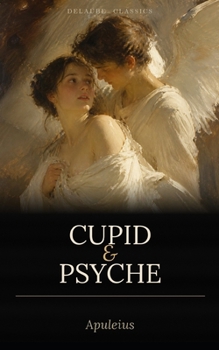
Cupid and Psyche: A new translation
No Customer Reviews

In a certain kingdom there once lived a princess so beautiful that men abandoned the temples of Venus to worship her instead. The goddess, enraged, sent her son Cupid to punish the girl by making her fall in love with the lowest creature on earth. Instead he fell in love with her himself, and carried her off to a hidden palace where he came to her only in the dark, forbidding her ever to look at his face.
Written in the second century, Apuleius's tale of Cupid and Psyche is the loveliest love story to come down to us from the Roman world. Beneath its surface of palaces, jealous sisters, and impossible labors lies an older pattern: the journey of the soul, falling, suffering, and at last returning to the love that drew it down. The story has shaped Boccaccio, Shakespeare, Keats, and C. S. Lewis, and stands behind almost every later tale of forbidden love and impossible reunion in Western literature. With an afterword on Apuleius himself-the North African philosopher, lecturer, and accused magician-and on the Platonic meaning of a heroine whose name is simply the Greek word for soul.Format:Paperback
Language:English
ISBN:B0GZGJP19X
ISBN13:9798195429782
Release Date:May 2026
Publisher:Independently Published
Length:64 Pages
Weight:0.16 lbs.
Dimensions:0.1" x 5.0" x 8.0"
Customer Reviews
0 rating
Copyright © 2026 Thriftbooks.com
Terms of Use | Privacy Policy | Do Not Sell/Share My Personal Information | Cookie Policy | Cookie Preferences | Accessibility Statement
ThriftBooks ® and the ThriftBooks ® logo are registered trademarks of Thrift Books Global, LLC
ThriftBooks ® and the ThriftBooks ® logo are registered trademarks of Thrift Books Global, LLC
