


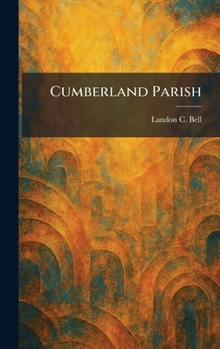
Cumberland Parish

"Cumberland Parish" is an essential historical and genealogical reference focusing on the parish of Lunenburg County, Virginia, from its formation in 1746 through the early 19th century. Written by Landon C. Bell, this work provides a meticulous examination of the region's development, bridging the gap between ecclesiastical history and local civil administration during the colonial and post-revolutionary eras.
The volume features detailed records from the parish vestry books, offering a unique perspective on the social and economic life of the period. By documenting the actions of the vestry-which managed everything from church maintenance to poor relief and local infrastructure-the text serves as a vital resource for understanding the governance of early Virginia. Furthermore, the inclusion of tithe lists and genealogical sketches makes this work an indispensable tool for researchers tracing the lineage of families who settled in this pivotal part of the Commonwealth. "Cumberland Parish" is a foundational study for those interested in the history of the South, the evolution of the Episcopal Church in America, and the preservation of primary source documents that define the early American experience.
This work has been selected by scholars as being culturally important, and is part of the knowledge base of civilization as we know it. This work was reproduced from the original artifact, and remains as true to the original work as possible. Therefore, you may see the original copyright references, library stamps (as most of these works have been housed in our most important libraries around the world), and other notations in the work.
This work is in the public domain in the United States of America, and possibly other nations. Within the United States, you may freely copy and distribute this work, as no entity (individual or corporate) has a copyright on the body of the work.
As a reproduction of a historical artifact, this work may contain missing or blurred pages, poor pictures, errant marks, etc. Scholars believe, and we concur, that this work is important enough to be preserved, reproduced, and made generally available to the public. We appreciate your support of the preservation process, and thank you for being an important part of keeping this knowledge alive and relevant.
Customer Reviews
ThriftBooks ® and the ThriftBooks ® logo are registered trademarks of Thrift Books Global, LLC
