


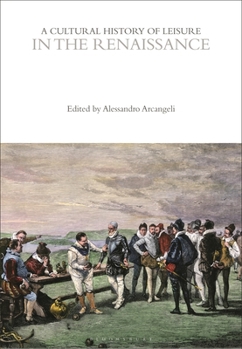
A Cultural History of Leisure in the Renaissance
No Customer Reviews

During the Renaissance (1450-1650), various forms of leisure - from theatre and reading to sports - became more prominent cultural phenomena due to professionalisation, institutionalisation and commercialisation. While festivals, sports and games from Antiquity were rediscovered, reevaluated and reappropriated, permanent theatres reappeared and the traditional cycles of festive culture gradually made way for a more continuous and visible leisure culture.
Educational, legal, theological-moral and medical authors contemplated new, more positive ideas about leisure and its functions in - and impact on - human beings and societies. Did these developments testify to "the invention of leisure in early modern Europe", as Peter Burke once famously argued? How did traditional and new forms of leisure coexist and interact? How did they spread across various classes, groups and regions? A Cultural History of Leisure in the Renaissance, with special interest in Italy, presents an overview ofkey themes and trends in this period, with essays on: Ideas of leisure; The performing arts and their
audiences; The cerebral arts and their publics; Sports and games; Holydays, holidays and tourism;
The world of conviviality; The world of goods; The world of nature; Representations of leisure. A Cultural History of Leisure is part of The Cultural Histories Series. Titles are available as hardcover sets for libraries needing just one subject or preferring a tangible reference for their shelves or as part of a fully-searchable digital library. The digital product is available to institutions by annual subscription or on perpetual access via www.bloomsburyculturalhistory.com . Individual volumes for academics and researchers interested in specific historical periods are also available in print or digitally via www.bloomsburycollections.com .
Format:Hardcover
Language:English
ISBN:1350057266
ISBN13:9781350057265
Release Date:June 2026
Publisher:Bloomsbury Academic
Length:256 Pages
Weight:1.50 lbs.
Dimensions:0.8" x 6.9" x 9.8"
Customer Reviews
0 rating
Copyright © 2026 Thriftbooks.com
Terms of Use | Privacy Policy | Do Not Sell/Share My Personal Information | Cookie Policy | Cookie Preferences | Accessibility Statement
ThriftBooks ® and the ThriftBooks ® logo are registered trademarks of Thrift Books Global, LLC
ThriftBooks ® and the ThriftBooks ® logo are registered trademarks of Thrift Books Global, LLC
