


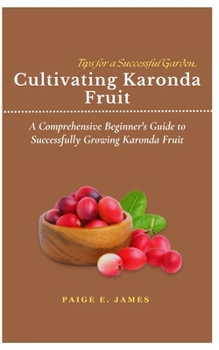
Cultivating Karonda Fruit Tips for a Successful Garden..: A Comprehensive Beginner's Guide to Successfully Growing Karonda Fruit
No Customer Reviews

Karonda, also known as Carissa carandas, is a hardy, drought-tolerant shrub native to the Indian subcontinent and Southeast Asia. The Apocynaceae family values the plant for its tart, juicy fruits, which find a variety of culinary applications. Karonda is known by different names in various regions, including "Christ's thorn" or "Bengal currant."
Botanical CharacteristicsPlant: Karonda is an evergreen shrub or small tree characterized by its spiny nature, with a potential height of 2-3 meters. The plant features leathery, dark green leaves and produces white or pinkish flowers.The fruit is small, oval in shape, and generally exhibits a dark purple to black coloration upon reaching full ripeness. The fruit features a succulent pulp characterized by a tangy flavor, while the unripe specimens display green or pinkish hues.The small, fragrant flowers are star-shaped and bloom in clusters, subsequently developing into fruits.Nutritional ValueKaronda is rich in nutrients, particularly vitamin C, iron, and various antioxidants. The fruit also contains a good amount of pectin, making it ideal for making jellies and jams.Culinary UsesPickles: Unripe karonda fruits are commonly used to make pickles, especially in India.Jams and Jellies: The fruit's high pectin content makes it ideal for preparing preserves and jellies.Chutneys and Sauces: To make tangy chutneys and sauces, use Karonda.Traditional folk medicine has used karonda to treat digestive disorders, anemia, and fevers.Cultivation
Karonda is a resilient plant that can grow in a variety of soil types, including poor, sandy soils. It prefers warm, tropical climates and can tolerate drought and heat. People often propagate the plant through seeds or cuttings.
Economic and Cultural Importance
Many cultures value karonda for its medicinal properties and incorporate it into traditional remedies, in addition to its culinary uses. Due to its thorny nature, people also use it as a hedge plant for boundary marking and protection.
Karonda is a versatile fruit with a rich history of use in various culinary and medicinal traditions, making it an intriguing and valuable plant in both home gardens and commercial cultivation.
Botanical CharacteristicsPlant: Karonda is an evergreen shrub or small tree characterized by its spiny nature, with a potential height of 2-3 meters. The plant features leathery, dark green leaves and produces white or pinkish flowers.The fruit is small, oval in shape, and generally exhibits a dark purple to black coloration upon reaching full ripeness. The fruit features a succulent pulp characterized by a tangy flavor, while the unripe specimens display green or pinkish hues.The small, fragrant flowers are star-shaped and bloom in clusters, subsequently developing into fruits.Nutritional ValueKaronda is rich in nutrients, particularly vitamin C, iron, and various antioxidants. The fruit also contains a good amount of pectin, making it ideal for making jellies and jams.Culinary UsesPickles: Unripe karonda fruits are commonly used to make pickles, especially in India.Jams and Jellies: The fruit's high pectin content makes it ideal for preparing preserves and jellies.Chutneys and Sauces: To make tangy chutneys and sauces, use Karonda.Traditional folk medicine has used karonda to treat digestive disorders, anemia, and fevers.Cultivation
Karonda is a resilient plant that can grow in a variety of soil types, including poor, sandy soils. It prefers warm, tropical climates and can tolerate drought and heat. People often propagate the plant through seeds or cuttings.
Economic and Cultural Importance
Many cultures value karonda for its medicinal properties and incorporate it into traditional remedies, in addition to its culinary uses. Due to its thorny nature, people also use it as a hedge plant for boundary marking and protection.
Karonda is a versatile fruit with a rich history of use in various culinary and medicinal traditions, making it an intriguing and valuable plant in both home gardens and commercial cultivation.
Format:Paperback
Language:English
ISBN:B0DQD95K8K
ISBN13:9798303325760
Release Date:December 2024
Publisher:Independently Published
Length:96 Pages
Weight:0.23 lbs.
Dimensions:0.2" x 5.0" x 8.0"
Customer Reviews
0 rating
Copyright © 2026 Thriftbooks.com
Terms of Use | Privacy Policy | Do Not Sell/Share My Personal Information | Cookie Policy | Cookie Preferences | Accessibility Statement
ThriftBooks ® and the ThriftBooks ® logo are registered trademarks of Thrift Books Global, LLC
ThriftBooks ® and the ThriftBooks ® logo are registered trademarks of Thrift Books Global, LLC
