


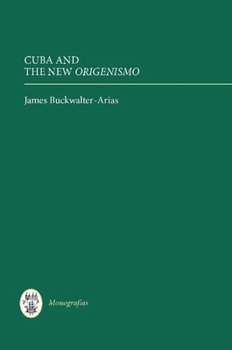
Cuba and the New Origenismo
No Customer Reviews

1990s' Cuban literature, caught between a beleaguered socialism and an encroaching global capitalism. The literary texts examined in this study were written in the 1990s, in the wake of a paradigm crisis for socialism and revolution. While Cuban literature was being re-commodified for an international publishing industry, variousCuban writers [Eliseo Alberto, Jes?s D?az, Leonardo Padura, Senel Paz, Antonio Jos? Ponte] reclaimed the cultural movement associated with the magazine Or?genes [1944-1956].
Disparaged and marginalized in the 1970s, the origenistas now constituted an emblem of literature's autonomy from the state and of its foundation in an authentic aesthetic sensibility. This neo-origenismo framed an ostensibly modernist literary utopia in thewreckage of a socialist utopia, at a historical moment in which both of these counter-hegemonic projects were overpowered by the culture industry of consumer capitalism.
The new origenismo thus speaks to the suspension of Cuban literature between the nation state and the transnational market, and indeed, to the suspension of Cuba itself between a beleaguered socialism and an encroaching global capitalism. JAMES BUCKWALTER-ARIAS is an Associate Professor of Spanish at Hanover College, Indiana.
Disparaged and marginalized in the 1970s, the origenistas now constituted an emblem of literature's autonomy from the state and of its foundation in an authentic aesthetic sensibility. This neo-origenismo framed an ostensibly modernist literary utopia in thewreckage of a socialist utopia, at a historical moment in which both of these counter-hegemonic projects were overpowered by the culture industry of consumer capitalism.
The new origenismo thus speaks to the suspension of Cuban literature between the nation state and the transnational market, and indeed, to the suspension of Cuba itself between a beleaguered socialism and an encroaching global capitalism. JAMES BUCKWALTER-ARIAS is an Associate Professor of Spanish at Hanover College, Indiana.
Format:Hardcover
Language:English
ISBN:1855661950
ISBN13:9781855661950
Release Date:March 2010
Publisher:Tamesis Books
Length:216 Pages
Weight:1.10 lbs.
Dimensions:0.7" x 9.2" x 6.2"
Customer Reviews
0 rating
Copyright © 2026 Thriftbooks.com
Terms of Use | Privacy Policy | Do Not Sell/Share My Personal Information | Cookie Policy | Cookie Preferences | Accessibility Statement
ThriftBooks ® and the ThriftBooks ® logo are registered trademarks of Thrift Books Global, LLC
ThriftBooks ® and the ThriftBooks ® logo are registered trademarks of Thrift Books Global, LLC
