


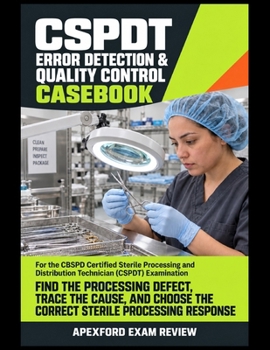
Cspdt Error Detection & Quality Control Casebook: Find the Processing Defect, Trace the Cause, and Choose the Correct Sterile Processing Response

A tray reaches the inspection bench, and one detail changes the decision. The instrument looks ready at first glance, but the stem introduces a concern about cleanliness, function, packaging, monitoring, or the record that follows it. Several answer choices sound reasonable. Your task is to identify the failed requirement, understand the risk, and select the response that belongs at this point in the workflow.
CSPDT Error Detection & Quality Control Casebook turns that moment into a repeatable study method. Written for candidates preparing for the CBSPD Certified Sterile Processing and Distribution Technician examination, it organizes review around five steps: spot the defect, identify the cause, determine the risk, choose the correct response, and prevent recurrence. Facts gain meaning through the decisions they govern.
Follow the item through the processing pathwayThe scope extends from decontamination to distribution. Review cleaning and disinfection, instrument inspection and assembly, packaging, sterilization, sterile storage, inventory, patient-care equipment, occupational safety, and ethics. Cases connect these topics across the eight examination content areas, asking you to notice when an upstream problem changes what may happen downstream. Manufacturer instructions, process evidence, and documentation remain central to the reasoning.
Five 100-question practice tests give the method a structured progression. Begin with defect recognition, then work through workflow and corrective-action decisions, applied quality-control cases, exceptions and high-risk boundaries, and integrated failure analysis. The five tests contain 500 main practice questions. Targeted retake sets follow as separate study activities, so you can return to a weak skill without treating the retakes as additional main tests.
Teaching rationales explain the principle behind each answer. Use the explanations to compare plausible alternatives, identify a missed clue, and understand a sequence error. The rationales include rules to remember, pitfalls, and examination cues. Mastery dashboards help you organize performance by domain and competency, turning a total score into a more specific review plan.
Return to the bench with a clearer questionThe final-day review chapter brings recurring distinctions together. Consult processing-gate maps, comparison tables, definitions, monitoring logic, failure patterns, and readiness checks when you need focused retrieval. Revisit cleaning versus sterilization failures, exposure indicators versus sterility assurance, package integrity versus elapsed time, and immediate risk control versus later root-cause work. The emphasis stays on the evidence that should change your choice.
This resource suits candidates who want to study sterile processing as a connected quality system. Follow the learn, test, review, and retake sequence to direct your study. Examine low-confidence correct answers as carefully as missed ones. In each case, aim to state the governing rule and explain why the strongest competing option does not fit the conditions.
These are original educational questions for independent examination preparation. The book is not sponsored, endorsed, or approved by CBSPD and does not reproduce live examination items. It does not replace facility procedures, device-specific instructions, or applicable professional guidance. Use the casebook to prepare with a defined question: what evidence must be acceptable before this item moves forward?
Customer Reviews
ThriftBooks ® and the ThriftBooks ® logo are registered trademarks of Thrift Books Global, LLC
