


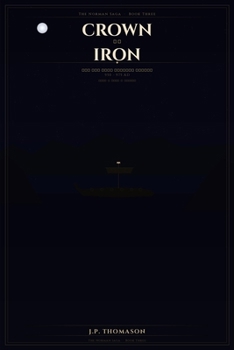
Crown of iron: The Norman saga- book 3

Rollo is dead. William Longsword is dead. Normandy belongs to a young duke named Richard, and Bjorn Iron-Wulf is fifty years old and finally coming home.
He has spent twenty years in the south building something that was his to build. Now he returns to a changed city, a changed duchy, and a project that is larger than he understood when he left - because Normandy was never just Normandy. It was always building toward something across the water.
England is moving toward its in-between time. The stable king will not last. The succession will fracture. And when it does, England will need what Normandy has learned to provide: the administrative coherence, the institutional depth, the specific Norman capacity to make a mixed society legible to itself.
Bjorn positions the pieces. He reads the young thelred and understands what England will need. He places Emma of Normandy as the bridge. And in the south, his son Harald builds the Contea di Ferro and waits - patient, capable, the best version of everything his father tried to be.
The trilogy concludes at seventy-five, in Winchester, with Harold Godwinson passing through the hall and the bridge still holding.
Crown of Iron is the concluding volume of The Norman Saga. The epilogue arrives ninety-one years later, at Hastings, 1066.
For readers of Bernard Cornwell and Conn Iggulden.
Customer Reviews
ThriftBooks ® and the ThriftBooks ® logo are registered trademarks of Thrift Books Global, LLC
