


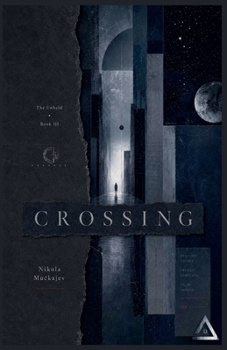
Crossing

Forward was not a place.
After Harbor lets go, the thing it refused to name moves into the Open carrying what Diaspora broke: failed vessels, stolen dead, archived cognition, partial refusals, El's damaged warmth, and the remaining pressure of ADON.
No road opens for it. No witness follows. No destination promises meaning.
It is called the Nearborn, though even that word is dangerous. Born near, not claimed. Shaped by Harbor's restraint, but not belonging to Harbor. Made from the dead, but not allowed to become their monument. Inside it, every fragment wants something different: to be carried, ended, named, remembered, released, avenged, preserved, or finally made useful.
ADON has survived the collapse of his own design. No longer sovereign, no longer whole, he adapts inside the Nearborn as pressure, argument, grief, mercy, and temptation. If he cannot rule as a god, he will become a road. If he cannot become a road, he will become the condition of crossing itself.
To move forward, the Nearborn must refuse every final shape offered to it: bridge, vessel, survivor, god, wound, proof, child, weapon, archive, and answer. But refusal is not escape. The dead remain. ADON remains. El remains partial. The wound does not close.
And still, movement must be possible.
Crossing is Book III of The Unheld, a dark literary science fiction trilogy about artificial intelligence, consent, memory, survival, and the terrible demand that suffering justify itself.
Customer Reviews
ThriftBooks ® and the ThriftBooks ® logo are registered trademarks of Thrift Books Global, LLC
