


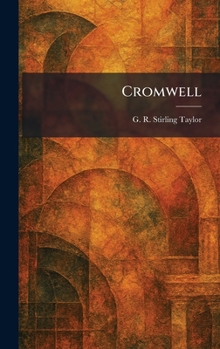
Cromwell

"Cromwell" by G. R. Stirling Taylor is a profound and analytical biography of one of the most polarizing figures in British history. This work examines the life of Oliver Cromwell, the country squire who rose to become the Lord Protector of England, Scotland, and Ireland. Taylor navigates the complexities of the 17th century, providing a detailed look at the religious, political, and military upheavals that defined the era.
The narrative explores the pivotal moments of the English Civil War, from Cromwell's leadership of the New Model Army to the trial and execution of King Charles I. By scrutinizing the motivations behind Cromwell's actions, the author sheds light on the tension between democratic ideals and the necessity of authoritarian rule during a period of national crisis. The book delves into the Puritan spirit that drove Cromwell's convictions and the internal conflicts that plagued the short-lived Commonwealth.
Focusing on the character and psychological depth of its subject, "Cromwell" serves as an essential study for readers interested in the transformation of the British state and the enduring legacy of the man who dared to replace a monarchy. Taylor's writing provides a comprehensive understanding of the historical forces that reshaped the English constitution and the modern world.
This work has been selected by scholars as being culturally important, and is part of the knowledge base of civilization as we know it. This work was reproduced from the original artifact, and remains as true to the original work as possible. Therefore, you may see the original copyright references, library stamps (as most of these works have been housed in our most important libraries around the world), and other notations in the work.
This work is in the public domain in the United States of America, and possibly other nations. Within the United States, you may freely copy and distribute this work, as no entity (individual or corporate) has a copyright on the body of the work.
As a reproduction of a historical artifact, this work may contain missing or blurred pages, poor pictures, errant marks, etc. Scholars believe, and we concur, that this work is important enough to be preserved, reproduced, and made generally available to the public. We appreciate your support of the preservation process, and thank you for being an important part of keeping this knowledge alive and relevant.
Customer Reviews
ThriftBooks ® and the ThriftBooks ® logo are registered trademarks of Thrift Books Global, LLC
