


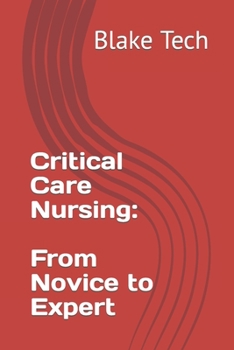
Critical Care Nursing: From Novice to Expert
No Customer Reviews

Critical Care Nursing: From Novice to Expert A critical care nurse must be able to assess a patient's condition and make quick decisions about the best course of treatment. They must also be able to provide emotional support to patients and their families.
Critical care nursing is a demanding field, and nurses must be able to handle a high level of stress. They must be able to work long hours and be on call for emergencies. The book covers the following: Chapter 1: Introduction to Critical Care Nursing
1.1 Role and Responsibilities of a Critical Care Nurse
1.2 Ethical and Legal Considerations in Critical Care Nursing
1.3 Critical Care Unit Organization and Team Collaboration
1.4 Patient Safety and Quality Improvement in Critical Care
1.5 Critical Thinking and Decision Making in Critical Care Nursing Chapter 2: Anatomy and Physiology in Critical Care
2.1 Cardiovascular System in Critical Care
2.2 Respiratory System in Critical Care
2.3 Neurological System in Critical Care
2.4 Renal System in Critical Care
2.5 Gastrointestinal System in Critical Care Chapter 3: Assessment and Monitoring in Critical Care
3.1 Physical Assessment Techniques in Critical Care
3.2 Hemodynamic Monitoring and Interpretation
3.3 Respiratory Monitoring and Interpretation
3.4 Neurological Assessment in Critical Care
3.5 Laboratory and Diagnostic Tests in Critical Care Chapter 4: Common Critical Care Conditions
4.1 Sepsis and Systemic Inflammatory Response Syndrome (SIRS)
4.2 Acute Respiratory Distress Syndrome (ARDS)
4.3 Hemodynamic Instability and Shock
4.4 Acute Kidney Injury (AKI) and Renal Replacement Therapy
4.5 Neurological Emergencies in Critical Care Chapter 5: Management of Cardiovascular Disorders
5.1 Cardiac Arrhythmias and Hemodynamic Support
5.2 Acute Coronary Syndrome and Myocardial Infarction
5.3 Heart Failure and Ventricular Assist Devices
5.4 Hypertensive Crisis and Hypotension Management
5.5 Cardiac Arrest and Advanced Cardiac Life Support (ACLS) Chapter 6: Respiratory Support and Mechanical Ventilation
6.1 Basic Principles of Mechanical Ventilation
6.2 Modes of Ventilation and Ventilator Settings
6.3 Troubleshooting and Complications of Mechanical Ventilation
6.4 Weaning and Extubation Process
6.5 Non-invasive Ventilation and High-Flow Oxygen Therapy Chapter 7: Neurological Support and Management
7.1 Intracranial Pressure Monitoring and Management
7.2 Traumatic Brain Injury and Spinal Cord Injury
7.3 Stroke and Neurological Assessment
7.4 Seizures and Status Epilepticus
7.5 Neuromuscular Disorders in Critical Care Chapter 8: Gastrointestinal Support and Nutrition
8.1 Enteral and Parenteral Nutrition in Critical Care
8.2 Gastrointestinal Bleeding and Ulcer Management
8.3 Liver Failure and Hepatic Encephalopathy
8.4 Pancreatitis and GI Inflammatory Disorders
8.5 Bowel Obstruction and Abdominal Compartment Syndrome Chapter 9: Renal Support and Fluid-Electrolyte Management
9.1 Acute Kidney Injury (AKI) and Renal Replacement Therapy
9.2 Fluid and Electrolyte Imbalances in Critical Care
9.3 Acid-Base Disorders and Management
9.4 Drug Dosing and Renal Impairment
9.5 Continuous Renal Replacement Therapy (CRRT) and Hemodialysis Chapter 10: Multisystem Trauma and Emergency Care
10.1 Trauma Assessment and Management
10.2 Multiple Organ Dysfunction Syndrome (MODS)
10.3 Burn Injury and Critical Care Management
10.4 Disaster Management and Mass Casualty Incidents
10.5 Ethical Considerations in Trauma and Emergency Care Chapter 11: Psychosocial and Family Support in Critical Care Chapter 12: Professional Development in Critical Care Nursing
Critical care nursing is a demanding field, and nurses must be able to handle a high level of stress. They must be able to work long hours and be on call for emergencies. The book covers the following: Chapter 1: Introduction to Critical Care Nursing
1.1 Role and Responsibilities of a Critical Care Nurse
1.2 Ethical and Legal Considerations in Critical Care Nursing
1.3 Critical Care Unit Organization and Team Collaboration
1.4 Patient Safety and Quality Improvement in Critical Care
1.5 Critical Thinking and Decision Making in Critical Care Nursing Chapter 2: Anatomy and Physiology in Critical Care
2.1 Cardiovascular System in Critical Care
2.2 Respiratory System in Critical Care
2.3 Neurological System in Critical Care
2.4 Renal System in Critical Care
2.5 Gastrointestinal System in Critical Care Chapter 3: Assessment and Monitoring in Critical Care
3.1 Physical Assessment Techniques in Critical Care
3.2 Hemodynamic Monitoring and Interpretation
3.3 Respiratory Monitoring and Interpretation
3.4 Neurological Assessment in Critical Care
3.5 Laboratory and Diagnostic Tests in Critical Care Chapter 4: Common Critical Care Conditions
4.1 Sepsis and Systemic Inflammatory Response Syndrome (SIRS)
4.2 Acute Respiratory Distress Syndrome (ARDS)
4.3 Hemodynamic Instability and Shock
4.4 Acute Kidney Injury (AKI) and Renal Replacement Therapy
4.5 Neurological Emergencies in Critical Care Chapter 5: Management of Cardiovascular Disorders
5.1 Cardiac Arrhythmias and Hemodynamic Support
5.2 Acute Coronary Syndrome and Myocardial Infarction
5.3 Heart Failure and Ventricular Assist Devices
5.4 Hypertensive Crisis and Hypotension Management
5.5 Cardiac Arrest and Advanced Cardiac Life Support (ACLS) Chapter 6: Respiratory Support and Mechanical Ventilation
6.1 Basic Principles of Mechanical Ventilation
6.2 Modes of Ventilation and Ventilator Settings
6.3 Troubleshooting and Complications of Mechanical Ventilation
6.4 Weaning and Extubation Process
6.5 Non-invasive Ventilation and High-Flow Oxygen Therapy Chapter 7: Neurological Support and Management
7.1 Intracranial Pressure Monitoring and Management
7.2 Traumatic Brain Injury and Spinal Cord Injury
7.3 Stroke and Neurological Assessment
7.4 Seizures and Status Epilepticus
7.5 Neuromuscular Disorders in Critical Care Chapter 8: Gastrointestinal Support and Nutrition
8.1 Enteral and Parenteral Nutrition in Critical Care
8.2 Gastrointestinal Bleeding and Ulcer Management
8.3 Liver Failure and Hepatic Encephalopathy
8.4 Pancreatitis and GI Inflammatory Disorders
8.5 Bowel Obstruction and Abdominal Compartment Syndrome Chapter 9: Renal Support and Fluid-Electrolyte Management
9.1 Acute Kidney Injury (AKI) and Renal Replacement Therapy
9.2 Fluid and Electrolyte Imbalances in Critical Care
9.3 Acid-Base Disorders and Management
9.4 Drug Dosing and Renal Impairment
9.5 Continuous Renal Replacement Therapy (CRRT) and Hemodialysis Chapter 10: Multisystem Trauma and Emergency Care
10.1 Trauma Assessment and Management
10.2 Multiple Organ Dysfunction Syndrome (MODS)
10.3 Burn Injury and Critical Care Management
10.4 Disaster Management and Mass Casualty Incidents
10.5 Ethical Considerations in Trauma and Emergency Care Chapter 11: Psychosocial and Family Support in Critical Care Chapter 12: Professional Development in Critical Care Nursing
Format:Paperback
Language:English
ISBN:B0C9K6GTRB
ISBN13:9798850077525
Release Date:June 2023
Publisher:Independently Published
Length:122 Pages
Weight:0.38 lbs.
Dimensions:0.3" x 6.0" x 9.0"
Customer Reviews
0 rating
Copyright © 2025 Thriftbooks.com
Terms of Use | Privacy Policy | Do Not Sell/Share My Personal Information | Cookie Policy | Cookie Preferences | Accessibility Statement
ThriftBooks ® and the ThriftBooks ® logo are registered trademarks of Thrift Books Global, LLC
ThriftBooks ® and the ThriftBooks ® logo are registered trademarks of Thrift Books Global, LLC
