


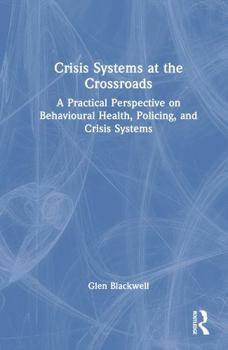
Crisis Systems at the Crossroads: A Practical Perspective on Behavioural Health, Policing, and Crisis Systems

Grounded in frontline experience and global research, this work unpacks the complexities of defining behavioural health, the challenge of crisis cycling, and the evolving roles of law enforcement and community partners. Written from the unique perspective of a seasoned police officer embedded in the world of behavioural health crisis response, this work offers an insider's examination of the evolving landscape of public safety and mental health intervention.
Drawing on lived experiences, operational insights, and contemporary best practices, the author advocates that police are one component within a broader collaborative, systems-based approach to crisis. Beginning with a foundational understanding of what forms a behavioural health crisis, the book guides readers through a range of response models - from nonpolice crisis lines and paramedic teams to police co-responder models and police call diversion programs. It critically examines the limitations of police training, the harsh realities of non-clinical outcomes such as tactical disengagement and use-of-force, and broader systemic pressures that shape crisis intervention. Each section ends with a reflective commentary, blending academic insight into frontline pragmatism. The final chapters look ahead, proposing integrated frameworks and collaborative strategies to proactively manage crisis cycling and building more responsive, humane systems.
With a focus on real-world application, informed by both practice and research, this book is an essential resource for policing professionals, behavioural health professionals, policymakers, and students seeking a grounded yet progressive approach to behavioural health crisis intervention.
Customer Reviews
ThriftBooks ® and the ThriftBooks ® logo are registered trademarks of Thrift Books Global, LLC
