


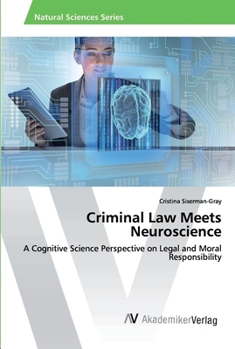
Criminal Law Meets Neuroscience
No Customer Reviews

As cognitive science continues to develop and inform our understanding of the brain, the opportunities for using neuroscientific evidence in criminal proceedings have also increased. The study discusses in an interdisciplinary manner the impact of neuroscience on the debates related to the concept of free will. It also analyzes how methods and tools of neuroscience can help in assessing the moral and legal responsibility of an individual. The study focuses on two major issues, which are addressed at length from a legal, philosophical and scientific standpoint. First, it evaluates from a theoretical perspective whether there is sufficient scientific research to support the idea that free will or free agency has been challenged by the advancements in neuroscience. Secondly, it empirically examines the views of judges, prosecutors and attorneys from three European countries (Austria, Romania and Slovenia) on the relevance of neuroscientific evidence in the assignment of criminal responsibility during court proceedings.
Format:Paperback
Language:English
ISBN:6202224444
ISBN13:9786202224444
Release Date:June 2019
Publisher:AV Akademikerverlag
Length:168 Pages
Weight:0.56 lbs.
Dimensions:0.4" x 6.0" x 9.0"
Related Subjects
LawCustomer Reviews
0 rating
Copyright © 2026 Thriftbooks.com
Terms of Use | Privacy Policy | Do Not Sell/Share My Personal Information | Cookie Notice | Cookie Preferences | Accessibility Statement
ThriftBooks ® and the ThriftBooks ® logo are registered trademarks of Thrift Books Global, LLC
ThriftBooks ® and the ThriftBooks ® logo are registered trademarks of Thrift Books Global, LLC
