


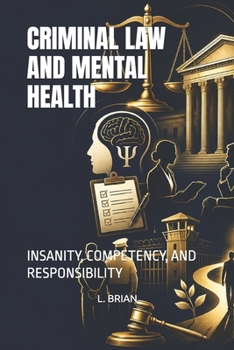
Criminal Law and Mental Health: Insanity, Competency, and Responsibility

The relationship between mental health and criminal law raises complex questions about responsibility, fairness, public safety, and the treatment of people with mental disorders. Legal systems must determine when mental illness may affect a person's criminal responsibility, ability to participate in legal proceedings, or eligibility for specialized treatment and diversion programs.
Whether you are a law student, legal researcher, criminal justice professional, educator, mental health professional, or reader seeking to understand the relationship between mental health and criminal law, this guide provides a useful foundation for exploring this important area.
Inside This Book, You Will Learn1. Mental Health and Criminal Responsibility
Explore the historical relationship between mental health and criminal responsibility, understand the foundations of criminal responsibility, and examine how modern legal systems approach mental disorders.
2. The Insanity Defense
Understand the origins of the insanity defense, explore different legal tests for insanity, examine burdens of proof, and review the significance of landmark cases.
3. Competency to Stand Trial
Learn what competency means in criminal proceedings, explore evaluation procedures and restoration programs, and understand how courts make competency determinations.
4. Diminished Capacity and Related Doctrines
Examine reduced mental responsibility, partial defenses, intoxication and mental states, and the potential sentencing implications of mental health evidence.
5. Forensic Mental Health Evaluations
Explore psychiatric assessments, psychological testing, expert reports, and the role of expert testimony in criminal proceedings.
6. Mental Illness in Correctional Settings
Understand mental health services in prisons, treatment challenges, suicide prevention considerations, and the rights of incarcerated persons.
7. Risk Assessment and Public Safety
Explore approaches to assessing dangerousness, violence risk assessment tools, community supervision, and ethical concerns surrounding predictions of future behavior.
8. Mental Health Courts and Diversion Programs
Learn about alternative justice models, treatment-oriented approaches, eligibility requirements, and methods used to evaluate the effectiveness of diversion programs.
9. Victims, Communities, and Mental Health Cases
Examine public perceptions, media coverage, victim concerns, and community safety considerations in cases involving mental health and criminal responsibility.
10. The Future of Mental Health and Criminal Law
Consider advances in neuroscience, the potential role of artificial intelligence in assessments, legislative reform, and evolving concepts of criminal responsibility.
Why This Book Is a Must HaveMental health can intersect with criminal law at several stages, from the alleged commission of an offense through trial, sentencing, incarceration, and community supervision. Understanding these issues requires careful consideration of both legal standards and mental health evidence.
The book covers insanity defenses, competency to stand trial, diminished capacity, forensic evaluations, mental illness in correctional settings, risk assessment, mental health courts, diversion programs, victim concerns, public safety, neuroscience, and emerging technologies.
#CriminalLaw #MentalHealthLaw #InsanityDefense #CompetencyToStandTrial #ForensicPsychology #CriminalResponsibility #CriminalJustice
Related Subjects
LawCustomer Reviews
ThriftBooks ® and the ThriftBooks ® logo are registered trademarks of Thrift Books Global, LLC
