


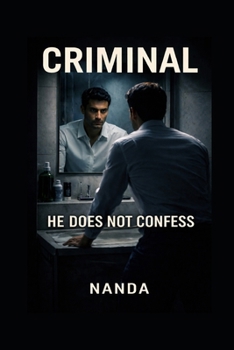
Criminal: He Does Not Confess

Sanjay never raises his voice.
He never fights back.
He never confesses.
When his family is quietly stripped of its inheritance, no law is broken, only justice. What follows is not a battle in courts or streets, but something far more unsettling. A man begins to learn how silence works, how rumors replace truth, and how systems reward those who observe rather than react.
As Sanjay grows, so does his understanding of power. Not the loud or visible kind, but the kind that operates through files, procedures, unspoken rules, and controlled distance. Every insult left unanswered, every injustice endured, every emotion restrained becomes part of a private ledger. He is not gathering evidence for revenge. He is learning how the world truly functions.
Relationships fracture. Affection becomes uneven. Morality begins to resemble administration. Somewhere between discipline and detachment, Sanjay crosses a line he once believed he never would.
This is not a story about crime in the conventional sense.
It is a story about how society manufactures criminals quietly and efficiently, without blood.
Criminal is a psychological and social novel about inheritance lost, dignity eroded, and the dangerous clarity born from prolonged silence. It asks an uncomfortable question.
What happens when a decent man stops seeking justice and starts understanding power?
Customer Reviews
ThriftBooks® and the ThriftBooks® logo are registered trademarks of Thrift Books Global, LLC
