


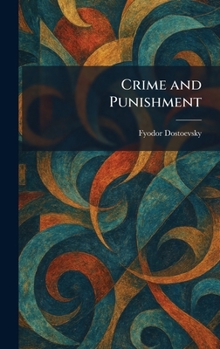
Crime and Punishment


Select Format
Select Condition 
Book Overview
"Crime and Punishment" is a profound psychological masterpiece that delves into the darkest recesses of the human soul. Set against the gritty backdrop of 19th-century St. Petersburg, the narrative follows Rodion Raskolnikov, a brilliant but impoverished former student who formulates a dangerous theory: that extraordinary individuals are permitted to transcend moral laws to achieve higher goals. To test this hypothesis, he commits a calculated murder, only to find himself trapped in a suffocating web of guilt, paranoia, and existential dread.
As the cunning investigator Porfiry Petrovich closes in, Raskolnikov undergoes an intense internal struggle between his pride and his conscience. Dostoevsky expertly weaves themes of suffering, alienation, and the possibility of spiritual redemption through the influence of the virtuous Sonya Marmeladova. This seminal work remains a cornerstone of world literature, offering a timeless exploration of the consequences of one's actions and the complexities of the moral law. It is a compelling study of the criminal mind and a powerful testament to the resilience of the human spirit.
This work has been selected by scholars as being culturally important, and is part of the knowledge base of civilization as we know it. This work was reproduced from the original artifact, and remains as true to the original work as possible. Therefore, you may see the original copyright references, library stamps (as most of these works have been housed in our most important libraries around the world), and other notations in the work.
This work is in the public domain in the United States of America, and possibly other nations. Within the United States, you may freely copy and distribute this work, as no entity (individual or corporate) has a copyright on the body of the work.
As a reproduction of a historical artifact, this work may contain missing or blurred pages, poor pictures, errant marks, etc. Scholars believe, and we concur, that this work is important enough to be preserved, reproduced, and made generally available to the public. We appreciate your support of the preservation process, and thank you for being an important part of keeping this knowledge alive and relevant.
Customer Reviews
Super small print, impossible to read!
Small print
Preferred Brothers over this
Absolutely Essential Reading
Book condition
Wonderful new translation
Detective Novel? Not quite.
Crime and Punishment Mentions in Our Blog
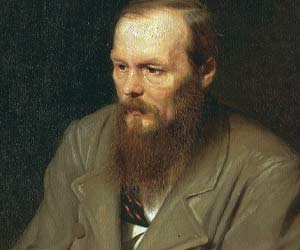
Fyodor Dostoyevsky's successful first book, Poor Folk, came out 175 years ago today when the author was only 24 years old. But in a life beset by drama worthy of, say, a Russian novel, it would be many years before he produced a notable follow-up. Here we explore the literary giant’s best books and how they mirror his extraordinary life.

ThriftBooks® and the ThriftBooks® logo are registered trademarks of Thrift Books Global, LLC
