


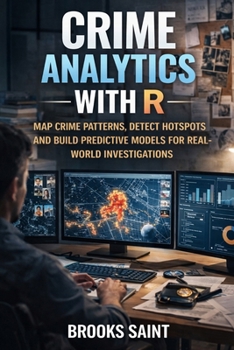
Crime Analytics with R: Map Crime Patterns, Detect Hotspots and Build Predictive Models for Real-World Investigations

CRIME ANALYTICS WITH R: MAP CRIME PATTERNS, DETECT HOTSPOTS AND BUILD PREDICTIVE MODELS FOR REAL-WORLD INVESTIGATIONS
Crime data is everywhere but most analysts never turn it into real intelligence. They generate charts, maps, and reports that look impressive but fail under scrutiny or collapse in real-world use. This book takes a different approach.
R for Criminology 2026 is built for practitioners who need results that hold up not just in theory, but in operational environments where decisions matter.
Instead of generic explanations, this book walks through how crime analytics actually works in practice: from messy incident reports to spatial modeling, predictive systems, and policy-driven insights. Every chapter is structured around real workflows, not abstract concepts.
This is not a textbook. It is a system.
Inside this book, you will learn how to:
Build clean, reliable crime datasets from raw police and justice recordsMap crime patterns and identify hotspots without misleading resultsAnalyze time-based crime trends to uncover high-risk periodsConstruct criminal networks and detect hidden connectionsIntegrate socioeconomic and environmental data for deeper insightBuild predictive crime models in R that avoid bias and overfittingCritically evaluate predictive policing systems and their real limitationsDesign dashboards and visualizations that support decision-makingDevelop real-time monitoring systems for emerging crime patternsTurn analytical findings into actionable strategies and policy decisionsBuild a complete end-to-end crime analytics system in RUnlike most books in this space, this guide does not assume that data is neutral or that models are always right. It shows where crime analytics fails and how to fix it.
This book is for:
Crime analysts and intelligence professionalsData scientists working with public safety dataResearchers in criminology and social scienceLaw enforcement agencies adopting data-driven approachesPolicy professionals focused on evidence-based decisionsIf you want to move beyond surface-level analysis and build systems that actually support real-world decisions, this book gives you the structure to do it.
Customer Reviews
ThriftBooks ® and the ThriftBooks ® logo are registered trademarks of Thrift Books Global, LLC
