
Skip to content
Scan a barcode
Scan
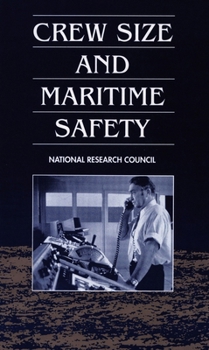
Hardcover Crew Size and Maritime Safety: Committee on the Effect of Smaller Crews on Maritime Safety Marine Board Commission on Engineering and Technical Syst Book

ISBN: 0309043751

ISBN13: 9780309043755

Crew Size and Maritime Safety: Committee on the Effect of Smaller Crews on Maritime Safety Marine Board Commission on Engineering and Technical Syst

U.S. oceangoing vessels have half the crew size of 30 years ago, thanks to automation and mechanization in the shipping industry. But are reductions in crew size increasing the risk of vessel accidents? Crew Size and Maritime Safety explores how we can minimize risk without hindering technology, presenting the most thorough analysis available of key issues such as domestic versus foreign manning practices and safety performance; effect of crew size on crew fatigue, level of training, and ship maintenance; and modernizing the U.S. Coast Guard approach to crew size regulation.

The volume features a trend analysis of 20 years of maritime safety data, analyzing U.S. and international laws and treaties concerning ship manning and making recommendations for improvements. In addition, it includes a model for setting optimum crew levels, based on systems engineering and tested with actual ships.

Recommended

Format: Hardcover

Temporarily Unavailable

We receive 1 copy every 6 months.

Save to List

Related Subjects

Transportation

Customer Reviews

1 rating

Dry, Yet Wet...

This book is an interesting analysis of safety considerations involved in reducing the number of sailors and seamen aboard merchant marine vessels. The central premise is that certain foreign nations (especially Japan and the Scandinavian countries) are successfully automating ships and sailing with far fewer men aboard than the US Coast Guard regulations allow. This is undoubtedly factually correct, but the positions of maritime unions are unanimous in arguing for keeping the number of men aboard constant. In truth, after reading the book including all the references and appendices, I was troubled by the extreme manpower reductions that are becoming more common, mostly due to lack of emergency manpower, particularly in the scenario of a major engine room fire, a subject dealt with extensively. After reading the book I came to the conclusion that some reductions were likely possible, but that the central problems were the arbitrary classifications of sailors and seamen based on decades old Coast Guard regulations. The book correctly identifies the workings of ships as complex sociotechnical systems comprised of four main elements (technologies, people, organizational structures, and external environment, p. 37.) Within this framework it specifically identifies many relevant issues, such as particularly heavy demands placed on crews that make frequent stops (most notably in coastal, gas, and chemical tankers, p.39,) and the relatively new concept of "single-handed bridge operation," in which only one person is on the bridge during routine watches in unobstructed water. The book details several training programs, which it stresses are vital for the successful and safe manning of ships. I was especially impressed by the account of the training by American President Lines for their C-9, J-9, and C-10 container ships ("Ships of the Future," p. 53.) Along those same lines, the book draws critical parallels between aviation and the maritime industries (p.75) without resorting to oversimplification of key differentiating factors. The book had many contributors, including Dr. Hal W. Hendrick, Dean of the College of Systems Science at the University of Denver, and one of the pioneering industrial psychologists in the field. Many professional and technical organizations were also consulted in the compilation of this report, including the forward-thinking and influential Sjofartsdirektoratet (Norwegian Maritime Directorate,) the Sjofartsverket Sjofartsinspektionen (Swedish Maritime Authority,) and the American Bureau of Shipping, making this an extremely comprehensive, yet concise, account of the issues facing maritime regulators and operators. This book is very dry, and is not casual reading. That isn't a criticism; it is rather to point out that this is a book for safety professionals and regulators, chiefly in the maritime industry, but with wide-ranging implications for other industries as well. For anyone whose job requires understanding maritime
Copyright © 2026 Thriftbooks.com Terms of Use | Privacy Policy | Do Not Sell/Share My Personal Information | Cookie Policy | Cookie Preferences | Accessibility Statement
ThriftBooks ® and the ThriftBooks ® logo are registered trademarks of Thrift Books Global, LLC

GoDaddy Verified and Secured