


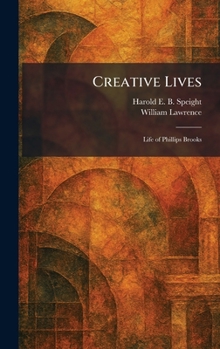
Creative Lives: Life of Phillips Brooks

"Creative Lives: Life of Phillips Brooks" provides an illuminating and personal account of one of the most celebrated figures in American religious history. Authored by William Lawrence, who served as Brooks's successor as Bishop of Massachusetts, this biography offers an authentic portrayal of a man whose powerful oratory and deep humanitarianism reshaped the spiritual life of the late 19th century.
The work chronicles the career of Phillips Brooks, from his influential ministry at Trinity Church in Boston to his profound impact as a leader within the Episcopal Church. Lawrence captures the spiritual depth and intellectual vitality that defined Brooks's character, exploring the themes of faith and service that he championed. The biography also touches upon his lasting cultural legacy, including his authorship of the timeless hymn "O Little Town of Bethlehem."
As a key entry in the "Creative Lives" series, this volume serves as both a historical record and an inspirational study of leadership. It delves into the theological developments of the era and the personal qualities that made Brooks a beloved figure across denominational lines. This work is an invaluable resource for readers interested in the intersection of American history, biography, and Christian thought.
This work has been selected by scholars as being culturally important, and is part of the knowledge base of civilization as we know it. This work was reproduced from the original artifact, and remains as true to the original work as possible. Therefore, you may see the original copyright references, library stamps (as most of these works have been housed in our most important libraries around the world), and other notations in the work.
This work is in the public domain in the United States of America, and possibly other nations. Within the United States, you may freely copy and distribute this work, as no entity (individual or corporate) has a copyright on the body of the work.
As a reproduction of a historical artifact, this work may contain missing or blurred pages, poor pictures, errant marks, etc. Scholars believe, and we concur, that this work is important enough to be preserved, reproduced, and made generally available to the public. We appreciate your support of the preservation process, and thank you for being an important part of keeping this knowledge alive and relevant.
Customer Reviews
ThriftBooks ® and the ThriftBooks ® logo are registered trademarks of Thrift Books Global, LLC
