


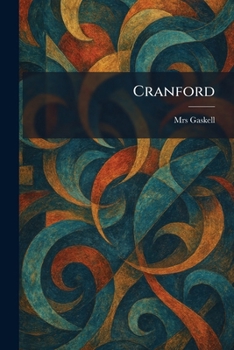
Cranford

"Cranford" is a delightful and poignant masterpiece by Elizabeth Gaskell, offering a vivid portrait of a small English market town in the mid-19th century. The narrative unfolds through a series of interconnected sketches, focusing on a community dominated by single women and widows who navigate life with "elegant economy."
At the heart of the story are the charming sisters, Miss Matty and Miss Jenkyns, whose lives are governed by strict codes of etiquette and a deep sense of social propriety. Through gentle humor and keen observation, Gaskell explores themes of friendship, kindness, and the challenges of a society undergoing rapid industrial and social change. While the town often seems frozen in time, the outside world occasionally breaks through, forcing the inhabitants to reconcile their traditional values with the encroaching modern era.
This classic work remains celebrated for its affectionate characterizations and its subtle critique of class distinctions. "Cranford" is an essential read for those interested in Victorian literature and the delicate, often humorous intricacies of provincial life.
This work has been selected by scholars as being culturally important, and is part of the knowledge base of civilization as we know it. This work was reproduced from the original artifact, and remains as true to the original work as possible. Therefore, you may see the original copyright references, library stamps (as most of these works have been housed in our most important libraries around the world), and other notations in the work.
This work is in the public domain in the United States of America, and possibly other nations. Within the United States, you may freely copy and distribute this work, as no entity (individual or corporate) has a copyright on the body of the work.
As a reproduction of a historical artifact, this work may contain missing or blurred pages, poor pictures, errant marks, etc. Scholars believe, and we concur, that this work is important enough to be preserved, reproduced, and made generally available to the public. We appreciate your support of the preservation process, and thank you for being an important part of keeping this knowledge alive and relevant.
Customer Reviews
ThriftBooks ® and the ThriftBooks ® logo are registered trademarks of Thrift Books Global, LLC
