


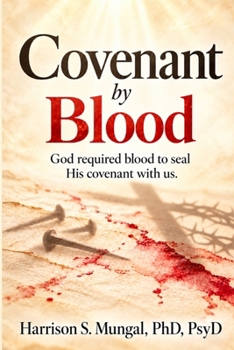
Covenant by Blood

Covenant is one of the great words of the Bible, yet it is also one of the words many Christians hear without always understanding its depth. We speak about the Old Covenant and the New Covenant. We take Communion and hear Jesus say that the cup represents the New Covenant in His blood. We sing about the blood of Jesus, preach about redemption, and celebrate forgiveness, yet we may not always stop to ask why Scripture connects covenant, blood, sacrifice, life, forgiveness, and belonging so closely together. This book was written to help make those connections clear.
Covenant by Blood is a journey through the biblical story of God making Himself known to humanity and providing a way for broken people to live in relationship with Him. It begins with the meaning of covenant itself and follows the pattern through Scripture: promise, sacrifice, blood, redemption, faithfulness, and fulfilment in Jesus Christ. My desire is not simply to explain a doctrine, but to help the reader see that covenant is the language of relationship. God does not merely give us information about Himself. He calls us to belong to Him.
The Bible presents covenant as far more than a casual agreement. Human contracts are often built around the possibility that one party may fail, so conditions and penalties are written into the agreement. Biblical covenant carries the idea of solemn commitment, relationship, faithfulness, and responsibility. Throughout Scripture, God reveals Himself as a covenant-making and covenant-keeping God. His promises to Noah, Abraham, Israel, David, and ultimately the New Covenant announced by the prophets all move the story toward Jesus Christ.
As you move through this book, you will see why blood becomes so important in that story. Scripture repeatedly connects blood with life. Leviticus 17 declares that the life of the flesh is in the blood, and God gave blood upon the altar for atonement. This does not mean blood is a magical substance. It means that blood represents life given. Sacrifice communicates that sin is serious, that life belongs to God, and that reconciliation with a holy God is costly. The entire sacrificial system teaches us to understand what Jesus would ultimately accomplish.
We will look at some of the earliest biblical pictures of sacrifice and covering, beginning with humanity's fall and the consequences of sin. We will consider Abel's offering and the blood that cried from the ground after Cain murdered him. We will follow Abraham as he learns covenant faith and later walks with Isaac toward Mount Moriah, where he declares that God Himself will provide the lamb. These stories are not isolated religious episodes. Together they form a pattern that prepares us to recognize the Lamb of God.
We will also ask one of the central questions of the book: Why does the blood of Jesus have such power? The answer cannot rest on speculative biology or popular religious claims. The biblical answer rests on who Jesus is. He is the sinless Son of God who became truly human, lived in perfect obedience, willingly gave His life, and rose from the dead. The value of His blood is inseparable from the value of the One who shed it. His blood represents His life poured out in sacrificial obedience for humanity.
That distinction is important because Christians sometimes speak about the blood in ways that can become disconnected from Christ Himself. The power is not in using the word "blood" as though it were a formula. The power is in Jesus Christ and in what He accomplished through His death and resurrection. His blood speaks of life given, sin judged, mercy opened, covenant established, redemption purchased, cleansing provided, and access to the Father made possible.
Jesus is uniquely qualified because He is truly divine and truly human. He stands as the mediator of the New Covenant and opens the way into God's presence.
Customer Reviews
ThriftBooks ® and the ThriftBooks ® logo are registered trademarks of Thrift Books Global, LLC
