


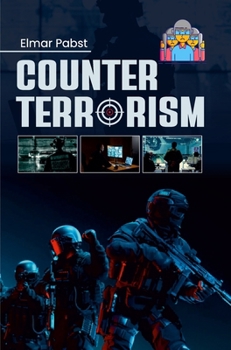
Counter Terrorism
No Customer Reviews

Over the past several decades, non-state actors have honed their tactics, exploiting weaknesses in governance, porous borders, and the rapid dissemination of information through digital media. This form of violence spans a spectrum from small-scale sabotage to large-scale attacks with catastrophic consequences. The diverse tactics employed-ranging from improvised explosive devices and coordinated assaults on soft targets to cyber incursions against critical infrastructure-demand a multifaceted understanding that combines strategic analysis, technological insight, and an appreciation for social drivers. This struggle pits security forces and intelligence agencies against agile networks that adapt quickly to shifting geopolitical landscapes. Ancient patterns reveal cycles of escalation and innovation: for instance, the shift from guerrilla warfare in the mid-twentieth century to the rise of transnational networks in the twenty-first. While early movements might have been regionally confined, today's groups maintain global reach, leveraging online platforms for recruitment, radicalization, and coordination. State responses have similarly evolved: from conventional military deployments to targeted intelligence operations, community policing initiatives, and legal frameworks designed to disrupt funding channels and communication nodes.
Format:Hardcover
Language:English
ISBN:9362244071
ISBN13:9789362244079
Release Date:January 2026
Publisher:Discovery Publishing House (India)
Length:284 Pages
Weight:1.44 lbs.
Dimensions:0.7" x 6.7" x 9.6"
Customer Reviews
0 rating
Copyright © 2026 Thriftbooks.com
Terms of Use | Privacy Policy | Do Not Sell/Share My Personal Information | Cookie Notice | Cookie Preferences | Accessibility Statement
ThriftBooks ® and the ThriftBooks ® logo are registered trademarks of Thrift Books Global, LLC
ThriftBooks ® and the ThriftBooks ® logo are registered trademarks of Thrift Books Global, LLC
