


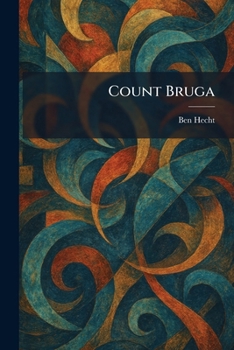
Count Bruga

Select Format
Select Condition 
Book Overview
"Count Bruga" is a sharp and biting satirical novel by the celebrated screenwriter and author Ben Hecht. The story centers on the eccentric and often absurd exploits of Count Hippolyt Bruga, a self-styled poet, magician, and decadent charlatan who maneuvers through the bohemian underworld of the 1920s. Through Bruga's grandiose delusions and his complicated romantic and social entanglements, Hecht provides a masterful skewering of the literary elite and the pretenses of urban intellectual circles.
Blending elements of farce, mystery, and surreal humor, the work serves as a vivid portrait of a man who is as much a fraud as he is a compelling figure of his time. "Count Bruga" captures the cynical charm and vibrant energy of early 20th-century American life, showcasing Hecht's signature wit and his keen ability to dissect the human ego. This novel remains an essential read for those interested in the history of American satire and the colorful characters that defined the Jazz Age literary landscape.
This work has been selected by scholars as being culturally important, and is part of the knowledge base of civilization as we know it. This work was reproduced from the original artifact, and remains as true to the original work as possible. Therefore, you may see the original copyright references, library stamps (as most of these works have been housed in our most important libraries around the world), and other notations in the work.
This work is in the public domain in the United States of America, and possibly other nations. Within the United States, you may freely copy and distribute this work, as no entity (individual or corporate) has a copyright on the body of the work.
As a reproduction of a historical artifact, this work may contain missing or blurred pages, poor pictures, errant marks, etc. Scholars believe, and we concur, that this work is important enough to be preserved, reproduced, and made generally available to the public. We appreciate your support of the preservation process, and thank you for being an important part of keeping this knowledge alive and relevant.
Customer Reviews
ThriftBooks ® and the ThriftBooks ® logo are registered trademarks of Thrift Books Global, LLC
