


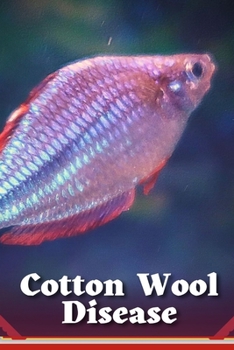
Cotton Wool Disease: Causes and Treatment in Aquarium Fish
No Customer Reviews

Cotton wool disease is a sickness in aquarium fish that can arise unexpectedly. It is fatal if left untreated and it can be complicated to deal with because it looks a lot like fungi and other aquarium fish diseases. The symptoms of the disease are also varied somewhat, making the diagnosis even more challenging. Fortunately, we are here to help to figure out what cotton wool disease looks like, its causes, and how to treat columnaris disease in fish. Cotton wool disease in fish is caused by a bacterium that goes by the Latin name Flavobacterium columnare. Also known simply as columnaris bacteria, these germs can actually be found in any aquarium, no matter how healthy or clean. Columnaris bacteria can be found on the skin, mucus membranes, gills, and even inside healthy fish. In small, controlled numbers, they are harmless organisms. However, they have the tendency to explode in population if the conditions are just right. When this happens the columnaris bacteria become cotton wool disease, transforming into a dangerous and contagious infection. What Causes Cotton Wool Disease in Fish?
Columnaris bacteria are always present in an aquarium environment. Normally they don't cause any problems at all - so how is it they can cause a debilitating and deadly disease?
Cotton wool disease almost always arises when fish are kept in polluted and crowded conditions. Overcrowding fish leads to high levels of nitrate and ammonia, both of which create stress on the immune system. Many fish tanks kept in these conditions are equipped with filters that are too weak to properly process biological waste products.
Columnaris bacteria are always present in an aquarium environment. Normally they don't cause any problems at all - so how is it they can cause a debilitating and deadly disease?
Cotton wool disease almost always arises when fish are kept in polluted and crowded conditions. Overcrowding fish leads to high levels of nitrate and ammonia, both of which create stress on the immune system. Many fish tanks kept in these conditions are equipped with filters that are too weak to properly process biological waste products.
Format:Paperback
Language:English
ISBN:B0BRLYJYZK
ISBN13:9798372523685
Release Date:January 2023
Publisher:Independently Published
Length:34 Pages
Weight:0.13 lbs.
Dimensions:0.1" x 6.0" x 9.0"
Customer Reviews
0 rating
Copyright © 2026 Thriftbooks.com
Terms of Use | Privacy Policy | Do Not Sell/Share My Personal Information | Cookie Policy | Cookie Preferences | Accessibility Statement
ThriftBooks ® and the ThriftBooks ® logo are registered trademarks of Thrift Books Global, LLC
ThriftBooks ® and the ThriftBooks ® logo are registered trademarks of Thrift Books Global, LLC
