


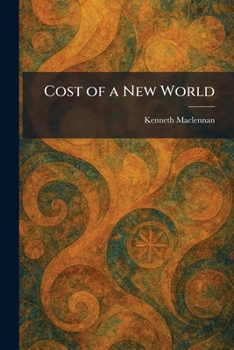
Cost of a New World

Select Format
Select Condition 
Book Overview
"Cost of a New World" offers a compelling analysis of the complex geopolitical and spiritual challenges facing the international community in the wake of the Great War. Kenneth Maclennan provides a deep exploration of the moral and material requirements for establishing a stable global society during the transformative 1920s. The work focuses on the intersection of Christian missions and world affairs, examining how religious principles might inform the creation of a more equitable and peaceful world order.
Maclennan navigates the intricate relationships between different nations and cultures, emphasizing the necessity of spiritual renewal alongside political and economic reform. By addressing critical issues such as industrialization, racial tensions, and the breakdown of traditional social structures, "Cost of a New World" provides a window into the intellectual and theological efforts to navigate a rapidly changing modern era. This book remains a significant resource for understanding the historical development of global consciousness and the enduring quest for social justice on a worldwide scale. It is an essential read for those interested in the history of international development and the role of faith in shaping 20th-century social thought.
This work has been selected by scholars as being culturally important, and is part of the knowledge base of civilization as we know it. This work was reproduced from the original artifact, and remains as true to the original work as possible. Therefore, you may see the original copyright references, library stamps (as most of these works have been housed in our most important libraries around the world), and other notations in the work.
This work is in the public domain in the United States of America, and possibly other nations. Within the United States, you may freely copy and distribute this work, as no entity (individual or corporate) has a copyright on the body of the work.
As a reproduction of a historical artifact, this work may contain missing or blurred pages, poor pictures, errant marks, etc. Scholars believe, and we concur, that this work is important enough to be preserved, reproduced, and made generally available to the public. We appreciate your support of the preservation process, and thank you for being an important part of keeping this knowledge alive and relevant.
Customer Reviews
ThriftBooks ® and the ThriftBooks ® logo are registered trademarks of Thrift Books Global, LLC
