


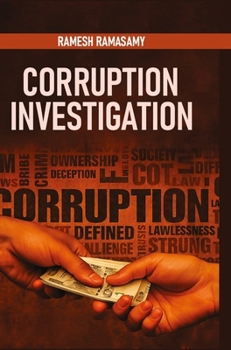
Corruption Investigation
No Customer Reviews

Over decades, scholars, investigators, and policymakers have sought to understand the mechanisms by which bribery, embezzlement, nepotism, and influence peddling flourish. This exploration embraces legal frameworks, economic incentives, organizational behavior, and cultural norms, recognizing that corruption rarely arises from a single actor or moment. Instead, it emerges from systemic vulnerabilities-gaps in oversight, weak enforcement, opaque transactions, and societal acquiescence-that enable wrongdoing to take root and spread. Effective analysis of corrupt schemes demands both breadth and depth of approach. Practitioners must survey the legislative landscape-national statutes, international conventions, and regional agreements-to identify legal thresholds and evidentiary requirements. They apply forensic accounting techniques to trace illicit flows of money, leveraging financial data analysis, transaction monitoring, and asset tracing. Investigators conduct interviews, review documents, and collaborate with whistle-blowers, while also addressing the ever-growing challenge of digital concealment through cryptocurrencies and complex shell-company structures. Understanding behavioral drivers-greed, fear, loyalty, or ideological conviction-provides insights into why individuals cross ethical lines, and informs strategies for prevention, detection, and remediation.
Format:Hardcover
Language:English
ISBN:936224795X
ISBN13:9789362247957
Release Date:January 2026
Publisher:Discovery Publishing House (India)
Length:288 Pages
Weight:1.45 lbs.
Dimensions:0.7" x 6.7" x 9.6"
Customer Reviews
0 rating
Copyright © 2026 Thriftbooks.com
Terms of Use | Privacy Policy | Do Not Sell/Share My Personal Information | Cookie Notice | Cookie Preferences | Accessibility Statement
ThriftBooks ® and the ThriftBooks ® logo are registered trademarks of Thrift Books Global, LLC
ThriftBooks ® and the ThriftBooks ® logo are registered trademarks of Thrift Books Global, LLC
