


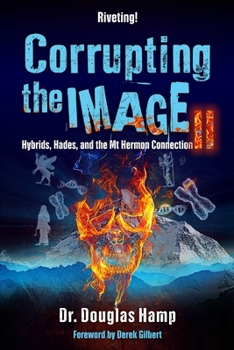
Corrupting the Image 2: Hybrids, Hades, and the Mt Hermon Connection

Corrupting the Image 2: Hybrids, Hades and the Mt Hermon Connection pulls back the curtain on the ancient war behind the headlines. If the book of Revelation sometimes feels like a coded dream sequence, this is your decoder ring, but with receipts.
At the heart of the investigation is Revelation's strange riddle: the beast that "was, and is not, and will ascend out of the bottomless pit," and the woman who rides it (Revelation 17). Rather than starting with modern speculation, Dr. Hamp traces this mystery back to ancient Shinar (Mesopotamia), arguing the end-time deception follows an ancient blueprint that has been hiding in plain sight for millennia.
This volume contends Satan has never stopped working toward one overarching goal: to corrupt the image of God in humanity and to offer a counterfeit "hero" who mimics the promises, language, and even the death-and-resurrection pattern that ultimately belongs to Jesus alone. From the earliest rebellions recorded in Genesis to the final confrontation described in Revelation, the same storyline keeps resurfacing, just wearing different cultural costumes.
Some of the remarkable discoveries explored in this book include:
The Hermon Stele: An ancient monument connected to the Mount Hermon region that echoes themes of divine kingship, rebellion, and sacred geography, reinforcing the biblical portrait of Hermon as ground zero for the Watchers' descent and the birth of the giant clans.A Mesopotamian cylinder seal depicting a woman riding a beast: An image that astonishingly parallels John's vision in Revelation 17, suggesting the core symbolism of the Whore of Babylon was already embedded in ancient Near Eastern iconography.The "was, is not, and will ascend" motif: How ancient texts preserve the memory of a slain-and-returning rebel figure, forming the backbone of the Beast's counterfeit resurrection narrative.The Tower of Babel as more than a tower: Why ziggurats functioned as cosmic mountains and gateway structures, and how Babel becomes the prototype of a counterfeit heaven on earth.Nimrod as post-Flood archetype: How Nimrod emerges as the first global strongman after the Flood and becomes the template for the end-times Beast.Along the way, Hamp weaves together Scripture, ancient inscriptions, linguistic analysis, and archaeology to show the Bible's supernatural worldview is not fringe-it is the worldview of the biblical authors themselves. Angels, giants, spirits, the underworld, and cosmic geography are not side topics; they are structural to the story.
You'll also encounter the idea that many pagan "gods" were not imaginary, but distorted memories of real rebellious spiritual beings and their hybrid offspring. These memories were later mythologized, sanitized, and eventually repackaged into the religious systems of the ancient world-systems that Revelation portrays as converging again in the last days.
This is not a sensationalist book. It is a heavily documented investigation that challenges readers to rethink comfortable assumptions and to read the Bible on its own ancient terms. Some sections dive deep into evidence; others move quickly to keep the larger narrative in view. The goal is not to overwhelm, but to illuminate.
If you're tired of a "safe" Bible that has no room for the supernatural beings Scripture openly discusses, Corrupting the Image 2 will feel like someone finally turned the lights on. Expect your understanding of Genesis, the prophets, the Gospels, and Revelation to sharpen-and your confidence in Jesus as the true Hero who exposes every counterfeit and wins the cosmic war to grow stronger.
Customer Reviews
ThriftBooks® and the ThriftBooks® logo are registered trademarks of Thrift Books Global, LLC
