


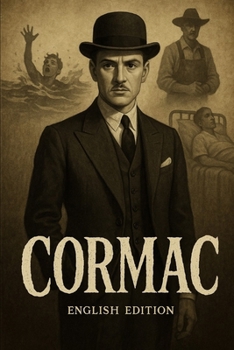
Cormac: English Edition

Cormac is a haunting psychological thriller that delves into the blurred lines between reality and performance, sanity and madness, the living and the dead.
Set in Dublin in 1930, the novel follows Cormac D'Arcy, once Ireland's most celebrated stage actor, as he descends into a mysterious psychological crisis following the consecutive deaths of his father, godson, and only son. As grief fractures his psyche, Cormac begins experiencing disturbing phenomena-speaking in voices not his own, seeing reflections that move independently, and setting his dining table for guests who no longer exist.
The narrative unfolds through the perspectives of those witnessing his deterioration: his loyal young servant Finnegan, his concerned cousin Siobh n, and Dr. Gerald Cormic, a psychiatrist and skeptic who arrives to evaluate Cormac's condition but finds his own scientific certainties challenged by the inexplicable events in the house on Mountjoy Square.
As Cormac's condition worsens, it becomes apparent that the theatrical characters he portrayed throughout his career-particularly from his controversial production of "The Watcher Behind the Mirror"-seem to be taking possession of him, using his grief as a doorway to enter reality. The connections to a theatrical disaster from 1928 and an ancient Romanian grimoire called "Theatrum Personarum Umbrae" reveal that what initially appeared to be mental illness might be something far more supernatural and dangerous.
The novel crescendos in a dramatic confrontation at the Olympia Theatre, where the barriers between fiction and reality collapse entirely, forcing each character to confront not only Cormac's demons but also their own beliefs about what exists beyond the visible world.
With its gothic atmosphere, psychological depth, and meditation on the nature of identity and performance, Cormac explores how the roles we play can sometimes play us, and how the line between actor and character can dissolve with terrifying consequences.
Customer Reviews
ThriftBooks® and the ThriftBooks® logo are registered trademarks of Thrift Books Global, LLC
