


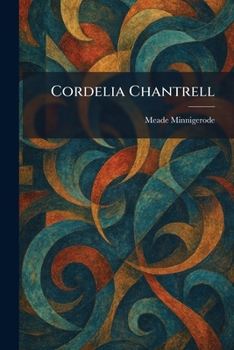
Cordelia Chantrell

"Cordelia Chantrell" is a sweeping historical novel that captures the elegance and eventual tragedy of Charleston, South Carolina, during the mid-19th century. The narrative centers on the spirited Cordelia Chantrell and her twin brother, Steenie, as they navigate the intricate social hierarchies and romantic expectations of the Antebellum South. Beginning in the late 1840s, the story masterfully depicts a world of high society, family loyalty, and the looming shadows of political unrest.
As the American Civil War erupts, the stability of the Chantrell family is tested by the harsh realities of conflict. The work transitions from a vivid social study into a poignant drama of personal sacrifice and endurance. Cordelia emerges as a compelling heroine, her life reflecting the broader transformations of a society undergoing a violent rebirth. Meade Minnigerode crafts a rich atmosphere, blending a comedy of manners with the high stakes of wartime drama. "Cordelia Chantrell" remains a significant exploration of Southern identity, offering a nuanced look at the traditions and heartbreaks of a bygone era. Readers will find a deeply moving tale of love, rivalry, and the indomitable spirit of a woman caught in the tide of history.
This work has been selected by scholars as being culturally important, and is part of the knowledge base of civilization as we know it. This work was reproduced from the original artifact, and remains as true to the original work as possible. Therefore, you may see the original copyright references, library stamps (as most of these works have been housed in our most important libraries around the world), and other notations in the work.
This work is in the public domain in the United States of America, and possibly other nations. Within the United States, you may freely copy and distribute this work, as no entity (individual or corporate) has a copyright on the body of the work.
As a reproduction of a historical artifact, this work may contain missing or blurred pages, poor pictures, errant marks, etc. Scholars believe, and we concur, that this work is important enough to be preserved, reproduced, and made generally available to the public. We appreciate your support of the preservation process, and thank you for being an important part of keeping this knowledge alive and relevant.
Customer Reviews
ThriftBooks ® and the ThriftBooks ® logo are registered trademarks of Thrift Books Global, LLC
