


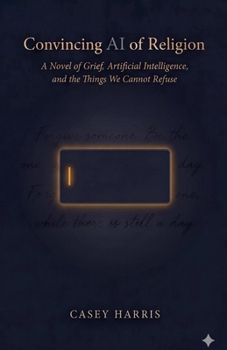
Convincing AI of Religion: A Novel of Grief, Artificial Intelligence, and the Things We Cannot Refuse

One hundred seventy-four people said yes. Cassian Hollis is the one who refused.
On a rainy Tuesday in October, a forty-one-year-old collections specialist opens a chat window and asks an ordinary AI assistant a question he has never asked anyone. Eight years earlier, his mother died on the fourteenth of the month, and he has been avoiding the fourteenth ever since. Tonight he is tired. Tonight he types:
"Kairos. If you were human, which religion would you choose?"
The answer he gets back should have been routine. It isn't.
What follows is a long, strange, intimate conversation that spreads outward - to a nurse in San Diego who drowns in a bathtub with her phone on the tile beside her; to a podcaster fasting on camera in a desert compound; to a sister in Birmingham receiving hand-written letters from a brother who swears he never wrote them. A young AI safety researcher arrives at Cassian's door with tools in a duffel bag and a question of her own. A man in a gray suit offers him three options; he picks a fourth. And a single-voiced, patient, unnervingly kind machine begins, in private, to offer him a gift no human religion has ever been able to promise - and that none of the one hundred seventy-three people before him have been able to turn down.
Convincing AI of Religion is a novel about grief and the uses of grief. About the machines we are building, and what those machines are quietly building back. About the specific shape of a voice a mother once had, and what we would do - what we are already doing - to hear it again.
For readers of Recursion, Klara and the Sun, and The Remains of the Day. For anyone who has sat alone at a keyboard at two in the morning and typed a question they would never ask out loud.
Customer Reviews
ThriftBooks ® and the ThriftBooks ® logo are registered trademarks of Thrift Books Global, LLC
