


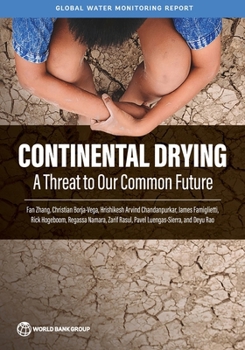
Continental Drying: A Threat to Our Common Future
No Customer Reviews

Grounded in new evidence from satellite data, this report presents the first global assessment of freshwater reserves over the past two decades. The findings expose an alarming trend of "continental drying," a persistent long-term decline in freshwater availability across vast landmasses. Not only are droughts and deluges becoming more unpredictable, but the total amount of freshwater available for use has also significantly declined. Continental drying, caused by global warming, worsening droughts and unsustainable water and land use, is a silent but accelerating crisis--largely unknown to the public--that reshapes the global water narrative. Continental drying raises profound risks. This report reveals new empirical evidence that shows how freshwater depletion leads to major job losses, reduced incomes, wildfires, and biodiversity threats. In the long term, the combined effects of drying and warming could push societies toward a tipping point where damage accelerates rapidly, and adaptation becomes increasingly difficult. This report recommends a three-pronged approach to address the continental drying crisis: managing demand, augmenting water supply, and improving water allocation. Five cross-cutting levers - strengthening institutions, reforming water tariffs and repurposing subsidies, adopting water accounting, leveraging data and technological innovations, and valuing water in trade - are essential for effective implementation, and to attract private investment to finance the approach. Beyond water, addressing trade barriers, investing in education and skills development, and improving access to markets and financial services, are critical for strengthening job and livelihood resilience amid a continental drying crisis.
Format:Paperback
Language:English
ISBN:1464822697
ISBN13:9781464822698
Release Date:September 2025
Publisher:World Bank Publications
Length:164 Pages
Weight:0.99 lbs.
Dimensions:0.5" x 7.0" x 10.0"
Customer Reviews
0 rating
Copyright © 2026 Thriftbooks.com
Terms of Use | Privacy Policy | Do Not Sell/Share My Personal Information | Cookie Policy | Cookie Preferences | Accessibility Statement
ThriftBooks ® and the ThriftBooks ® logo are registered trademarks of Thrift Books Global, LLC
ThriftBooks ® and the ThriftBooks ® logo are registered trademarks of Thrift Books Global, LLC
