


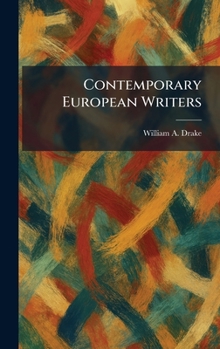
Contemporary European Writers

"Contemporary European Writers" by William A. Drake is an insightful collection of biographical and critical essays that provides a panoramic view of the European literary landscape during the transformative early decades of the twentieth century. This work offers detailed profiles of nearly forty influential figures who defined modern letters, including such luminaries as Marcel Proust, Thomas Mann, Paul Val ry, and Luigi Pirandello. Drake explores the intellectual currents and artistic movements-from French symbolism to German expressionism-that shaped the continent's diverse creative output following World War I.
Each chapter serves as both a concise introduction to a writer's life and a thoughtful analysis of their primary works, capturing the spirit of an era marked by radical experimentation and cultural shifts. By evaluating these authors within their own contemporary context, Drake provides a valuable historical perspective on the development of modern European fiction, poetry, and drama. This volume remains an essential resource for students of comparative literature and those interested in the lives and legacies of the writers who laid the foundations for modernism. It stands as a significant record of the literary giants who dominated the European consciousness during a golden age of intellectual inquiry.
This work has been selected by scholars as being culturally important, and is part of the knowledge base of civilization as we know it. This work was reproduced from the original artifact, and remains as true to the original work as possible. Therefore, you may see the original copyright references, library stamps (as most of these works have been housed in our most important libraries around the world), and other notations in the work.
This work is in the public domain in the United States of America, and possibly other nations. Within the United States, you may freely copy and distribute this work, as no entity (individual or corporate) has a copyright on the body of the work.
As a reproduction of a historical artifact, this work may contain missing or blurred pages, poor pictures, errant marks, etc. Scholars believe, and we concur, that this work is important enough to be preserved, reproduced, and made generally available to the public. We appreciate your support of the preservation process, and thank you for being an important part of keeping this knowledge alive and relevant.
Customer Reviews
ThriftBooks ® and the ThriftBooks ® logo are registered trademarks of Thrift Books Global, LLC
