


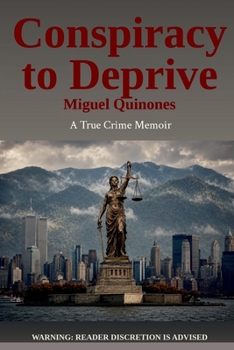
Conspiracy to Deprive: Warning: Reader discretion is advised

He was acquitted of murder and kidnapping. Then the government punished him as though the jury had never spoken.
Conspiracy to Deprive is a gripping true account of a criminal case built through disputed statements, unsupported forensic conclusions, and the accumulated authority of investigators, medical examiners, prosecutors, and courts.
Drawing from recordings, police reports, autopsy findings, sworn testimony, court filings, and personal memory, the author reconstructs how the case against him took shape-and how its central claims unraveled before a jury. Yet acquittal did not end the ordeal. In federal court, allegations rejected in the state prosecution returned as "acquitted conduct" and helped increase his punishment.
Moving from the investigation to the history that made him vulnerable, and finally into the courtroom where the State's evidence was tested, this memoir examines more than one prosecution. It confronts unreliable forensic evidence, institutional misconduct, unequal access to justice, and the devastating consequences faced by people who lack the resources to defend themselves.
Both personal testimony and a call to action, Conspiracy to Deprive asks readers to look beyond the authority of an official report and examine how evidence is actually created, reinforced, and used.
This is the story of one man's fight against a case built around him-and a warning about what can happen when the pursuit of conviction overtakes the pursuit of truth.
Customer Reviews
ThriftBooks ® and the ThriftBooks ® logo are registered trademarks of Thrift Books Global, LLC
