


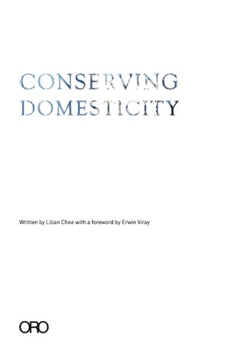
Conserving Domesticity
No Customer Reviews

Domesticity implicates notions of gender, sexuality, labour, class, ethnicity and taste. It draws upon the performative aspect of its occupants in space, and materialises ambitions for comfort, security, privacy and independence. The conserved domestic space is unlike the conserved monument. It must be flexible to change, intensified occupation, unusual habits, and robust enough to accommodate use and decay. It is a space marked by the passing of time associated with occupancy - cycles of moving in, starting a family, growing old and dying. It is also, no matter how temporary, a space one calls 'home, ' and thus includes physical, geographical and mental registers related to this idea. What does it mean to conserve a house? Can conservation's motives and domesticity's purpose converge in the house's interior? This volume explores such questions by reflecting on the afterlife of several conserved domestic spaces.
Format:Paperback
Language:English
ISBN:0985681217
ISBN13:9780985681210
Release Date:October 2012
Publisher:Oro Editions
Length:126 Pages
Weight:1.10 lbs.
Dimensions:0.8" x 6.4" x 9.4"
Related Subjects
ArchitectureCustomer Reviews
0 rating
Copyright © 2026 Thriftbooks.com Terms of Use
| Privacy Policy | Do Not
Sell/Share My Personal Information | Cookie Policy | Cookie Preferences | Accessibility Statement
ThriftBooks® and the ThriftBooks® logo are registered trademarks of Thrift Books Global, LLC
ThriftBooks® and the ThriftBooks® logo are registered trademarks of Thrift Books Global, LLC
