


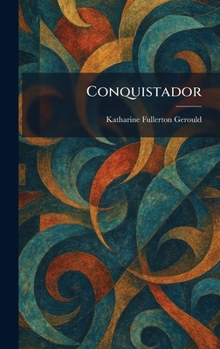
Conquistador

"Conquistador" is a compelling exploration of cultural identity and the internal conflict of a man caught between two vastly different worlds. The story follows Paul Cameron, an American of Scottish descent, who travels to Mexico to claim his maternal inheritance: the sprawling and ancient estate of Cuesta la Plata. As he immerses himself in the traditions and expectations of his Mexican ancestors, he finds himself increasingly transformed by the landscape, the people, and a rigid social code that challenges his northern upbringing.
Katharine Fullerton Gerould masterfully portrays the tension between Cameron's American sensibilities and the aristocratic, almost feudal lifestyle of the Mexican hacienda. The narrative delves into the complexities of loyalty, bloodlines, and the seductive power of a culture that demands total devotion. Cameron must decide whether he will remain an outsider or fully embrace the role of the master of Cuesta la Plata, a choice that carries profound personal consequences.
Written with keen psychological insight, "Conquistador" offers a nuanced look at the early 20th-century relationship between the United States and Mexico. It stands as a significant work of literary fiction that examines how place and heritage shape the human soul, providing readers with a rich, atmospheric journey into the heart of the Mexican borderlands.
This work has been selected by scholars as being culturally important, and is part of the knowledge base of civilization as we know it. This work was reproduced from the original artifact, and remains as true to the original work as possible. Therefore, you may see the original copyright references, library stamps (as most of these works have been housed in our most important libraries around the world), and other notations in the work.
This work is in the public domain in the United States of America, and possibly other nations. Within the United States, you may freely copy and distribute this work, as no entity (individual or corporate) has a copyright on the body of the work.
As a reproduction of a historical artifact, this work may contain missing or blurred pages, poor pictures, errant marks, etc. Scholars believe, and we concur, that this work is important enough to be preserved, reproduced, and made generally available to the public. We appreciate your support of the preservation process, and thank you for being an important part of keeping this knowledge alive and relevant.
Customer Reviews
ThriftBooks ® and the ThriftBooks ® logo are registered trademarks of Thrift Books Global, LLC
