


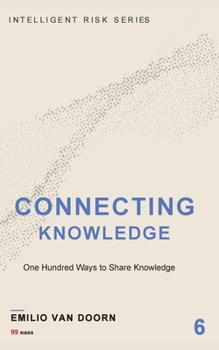
Connecting knowledge

Connecting Knowledge is a practical collection of 100 questions, instructions and reflections designed to help organisations turn fragmented information, expertise and experience into shared organisational capability.
Knowledge rarely sits neatly in one place. It is distributed across teams, functions, specialists, systems, relationships and the people closest to the work. The challenge is not simply having knowledge. It is ensuring that what one part of the organisation knows can reach another part with enough context, meaning and trust to be useful.
Connecting Knowledge explores ten dimensions of organisational connection: shared outcomes, moving information across boundaries, complete handovers, connecting decisions to reality, incentives and cooperation, informal influence, trust and truth, expertise that travels, connection to the external environment, and preserving connection through change.
Each page contains a single prompt that can be used independently in a leadership meeting, governance discussion, project review, workshop or cross-functional conversation. The questions challenge silos, expose where meaning is lost and encourage leaders to examine the relationships through which organisational intelligence actually moves.
A shared dashboard does not guarantee shared understanding. A handover is more than the movement of a document. And a strategically coherent decision can still fail when knowledge from the point of delivery never reaches the people making it. These are the connections that determine whether separate parts of an organisation can operate intelligently as a whole.
Part of the six-volume Intelligent Risk Series, Connecting Knowledge is designed for executives, directors, governance professionals, risk practitioners, program and project leaders, knowledge professionals and decision-makers working across organisational boundaries.
Knowledge becomes organisational capability when it can move, connect and remain useful beyond the person or function that first held it.
Customer Reviews
ThriftBooks ® and the ThriftBooks ® logo are registered trademarks of Thrift Books Global, LLC
