


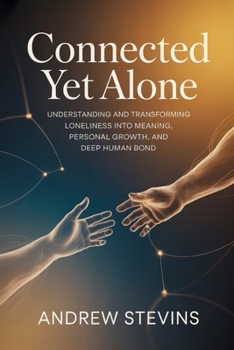
Connected Yet Alone: Understanding and Transforming Loneliness into Meaning, Personal Growth, and Deep Human Bond

In an age where people are more connected than ever yet feel more isolated, Connected Yet Alone offers an authoritative and compassionate roadmap out of the pervasive loneliness that shapes modern life. Grounded in psychology, neuroscience, and real-world experience, this comprehensive guide reframes loneliness not as a personal failure but as a universal human signal pointing toward unmet needs and unrealized potential.
Drawing on current research into social isolation, emotional intelligence, and the neuroscience of human connection, Connected Yet Alone reveals why individuals can feel deeply alone in crowds, relationships, and even long-term partnerships. It explains how modern urban living, digital communication, and shifting cultural expectations have transformed the way we connect, often at the expense of emotional fulfillment.
Through ten insightful chapters, this book guides readers to:
- Understand the psychological and physiological roots of loneliness
- Reclaim agency and build meaningful social bonds
- Navigate life transitions without losing relational identity
- Master emotional intelligence for deeper interpersonal connection
- Balance solitude and social engagement with intention
- Use technology to enhance rather than replace real-world interaction
Whether you are struggling with chronic loneliness or seeking richer, more authentic relationships, this book offers practical strategies, reflective exercises, and evidence-based techniques to transform isolation into resilience, presence, and belonging. It goes beyond quick fixes, providing a sustainable framework for long-term fulfillment that aligns with personal values and life purpose.
Connected Yet Alone is essential reading for anyone who has ever felt unseen, unheard, or disconnected despite being surrounded by others. It reveals a fundamental truth: loneliness is a part of being human, but it does not have to define your life.
Customer Reviews
ThriftBooks® and the ThriftBooks® logo are registered trademarks of Thrift Books Global, LLC
