


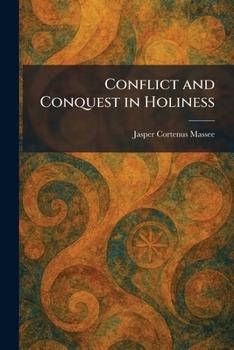
Conflict and Conquest in Holiness

"Conflict and Conquest in Holiness" is a profound exploration of the spiritual journey toward sanctification and religious devotion. Written by the influential Baptist preacher Jasper Cortenus Massee, this work delves into the internal and external struggles faced by believers in their pursuit of a holy life. Massee provides a practical yet insightful guide to overcoming spiritual obstacles, emphasizing the triumph of faith over the trials of the soul.
The book examines the dual nature of the Christian experience-the "conflict" of the earthly struggle and the "conquest" achieved through divine grace and personal discipline. Drawing upon scriptural principles and his extensive experience in ministry, Massee offers readers a roadmap for deepening their relationship with God and achieving a life of consistent spiritual victory. This work stands as a significant contribution to early 20th-century devotional literature, providing timeless wisdom for those seeking to grow in their faith. "Conflict and Conquest in Holiness" remains a vital resource for understanding the fundamentalist perspective on personal piety and the transformative power of the Christian message.
This work has been selected by scholars as being culturally important, and is part of the knowledge base of civilization as we know it. This work was reproduced from the original artifact, and remains as true to the original work as possible. Therefore, you may see the original copyright references, library stamps (as most of these works have been housed in our most important libraries around the world), and other notations in the work.
This work is in the public domain in the United States of America, and possibly other nations. Within the United States, you may freely copy and distribute this work, as no entity (individual or corporate) has a copyright on the body of the work.
As a reproduction of a historical artifact, this work may contain missing or blurred pages, poor pictures, errant marks, etc. Scholars believe, and we concur, that this work is important enough to be preserved, reproduced, and made generally available to the public. We appreciate your support of the preservation process, and thank you for being an important part of keeping this knowledge alive and relevant.
Customer Reviews
ThriftBooks ® and the ThriftBooks ® logo are registered trademarks of Thrift Books Global, LLC
