


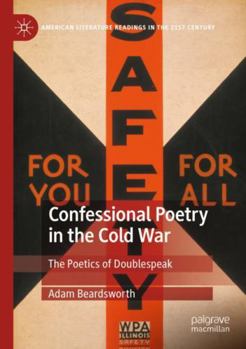
Confessional Poetry in the Cold War: The Poetics of Doublespeak
No Customer Reviews

Select Format
Select Condition 
Book Overview
This book explores how confessional poets in the 1950s and 1960s US responded to a Cold War political climate that used the threat of nuclear disaster and communist infiltration as affective tools for the management of public life. In an era that witnessed the state-sanctioned repression of civil liberties, poets such as Robert Lowell, John Berryman, Sylvia Plath, Anne Sexton, and Randall Jarrell adopted what has often been considered a politically benign confessional style. Although confessional writers have been criticized for emphasizing private turmoil in an era of public crisis, examining their work in relation to the political and affective environment of the Cold War US demonstrates their unique ability to express dissent while averting surveillance. For these poets, writing the fear and anxiety of life in the bomb's shadow was a form of poetic doublespeak that critiqued the impact of an affective Cold War politics without naming names.
Format:Paperback
Language:English
ISBN:303093117X
ISBN13:9783030931179
Release Date:February 2023
Publisher:Palgrave MacMillan
Length:186 Pages
Weight:0.53 lbs.
Dimensions:0.4" x 5.8" x 8.3"
Customer Reviews
0 rating
Copyright © 2026 Thriftbooks.com Terms of Use
| Privacy Policy | Do Not
Sell/Share My Personal Information | Cookie Policy | Cookie Preferences | Accessibility Statement
ThriftBooks® and the ThriftBooks® logo are registered trademarks of Thrift Books Global, LLC
ThriftBooks® and the ThriftBooks® logo are registered trademarks of Thrift Books Global, LLC
