


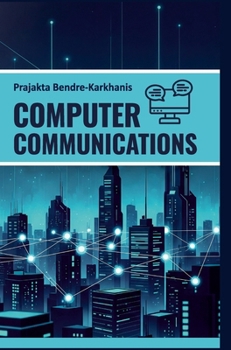
Computer Communications
No Customer Reviews

The study of computer communications brings together principles of electrical engineering, information theory, and computer science to enable reliable exchange of data across diverse networks. In fact, it refers the conversion of physical phenomena-voltage levels, light pulses, radio waves-into patterns of bits that represent meaningful information. From the earliest telegraph lines to today's global fiber-optic and wireless infrastructures, the challenge has remained the same: how to move data accurately, efficiently, and securely over imperfect media. Understanding signal representation, distortion effects, synchronization methods, and error-control strategies provides the foundation for designing systems that meet ever-increasing demands for speed and capacity. Computer Communications provides a comprehensive guide to the key concepts, techniques, and technologies that enable digital networks. This text presents theory alongside practical considerations, offering both the analytical tools needed to evaluate system performance and the engineering insight required to implement real-world solutions. Each chapter builds on the last, leading readers through fundamental topics toward advanced methods in network design and management.
Format:Hardcover
Language:English
ISBN:9362249693
ISBN13:9789362249692
Release Date:January 2026
Publisher:Discovery Publishing House (India)
Length:256 Pages
Weight:1.34 lbs.
Dimensions:0.6" x 6.7" x 9.6"
Customer Reviews
0 rating
Copyright © 2026 Thriftbooks.com
Terms of Use | Privacy Policy | Do Not Sell/Share My Personal Information | Cookie Policy | Cookie Preferences | Accessibility Statement
ThriftBooks ® and the ThriftBooks ® logo are registered trademarks of Thrift Books Global, LLC
ThriftBooks ® and the ThriftBooks ® logo are registered trademarks of Thrift Books Global, LLC
