


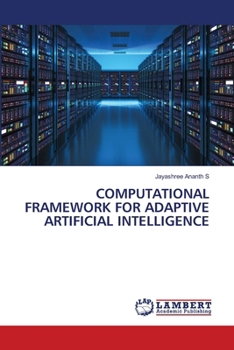
Computational Framework for Adaptive Artificial Intelligence
No Customer Reviews

The development of a computational framework for adaptive artificial intelligence represents a transformative shift in the evolution of intelligent systems. Throughout this book, we have examined the theoretical foundations, algorithmic principles, architectural designs, and ethical implications that collectively define adaptive AI. At its core, adaptive artificial intelligence refers to systems that possess the capacity to learn continuously from data, modify internal representations in response to environmental changes, and improve performance without explicit reprogramming. Unlike traditional static models that rely on predefined rules or fixed training phases, adaptive AI systems operate in dynamic environments where uncertainty, variability, and incomplete information are inherent characteristics. The integration of computational intelligence methods, machine learning paradigms, reinforcement learning strategies, neural network architectures, and systems engineering principles forms the backbone of this adaptive framework.
Format:Paperback
Language:English
ISBN:6209827071
ISBN13:9786209827075
Release Date:March 2026
Publisher:LAP Lambert Academic Publishing
Length:144 Pages
Weight:0.44 lbs.
Dimensions:0.3" x 6.0" x 9.0"
Customer Reviews
0 rating
Copyright © 2026 Thriftbooks.com
Terms of Use | Privacy Policy | Do Not Sell/Share My Personal Information | Cookie Policy | Cookie Preferences | Accessibility Statement
ThriftBooks ® and the ThriftBooks ® logo are registered trademarks of Thrift Books Global, LLC
ThriftBooks ® and the ThriftBooks ® logo are registered trademarks of Thrift Books Global, LLC
