


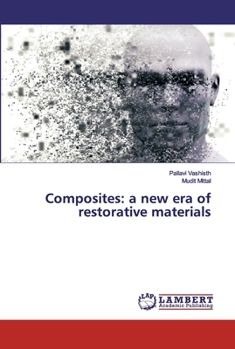
Composites: a new era of restorative materials
No Customer Reviews

The first material developed for use as a direct esthetic restorative material was silicate cement. Introduced in the late 1800s, the cement was prepared from an alumina/silica glass and a phosphoric acid liquid. Highly soluble in oral fluids, silicate deteriorated rapidly, yet remained the favored material until the early 1950s. Dissolution, discoloration, loss of translucency and lack of adequate mechanical properties contributed to its eventual replacement. Its main advantage was the slow release of fluoride from the glass phase. Self curing unfilled acrylic resin were introduced around 1945 as a substitute for silicate cement and were in moderate use in the 1950s. These materials were related to denture base resins and were much less soluble and more color stable than silicates. They were easy to use, polishable and had good initial esthetics. Their main problems were high shrinkage upon polymerization, large thermal dimensional change, eventual discoloration and a high wear rate.
Format:Paperback
Language:English
ISBN:3659942944
ISBN13:9783659942945
Release Date:September 2019
Publisher:LAP Lambert Academic Publishing
Length:144 Pages
Weight:0.49 lbs.
Dimensions:0.3" x 6.0" x 9.0"
Customer Reviews
0 rating
Copyright © 2026 Thriftbooks.com Terms of Use
| Privacy Policy | Do Not
Sell/Share My Personal Information | Cookie Policy | Cookie Preferences | Accessibility Statement
ThriftBooks® and the ThriftBooks® logo are registered trademarks of Thrift Books Global, LLC
ThriftBooks® and the ThriftBooks® logo are registered trademarks of Thrift Books Global, LLC
