


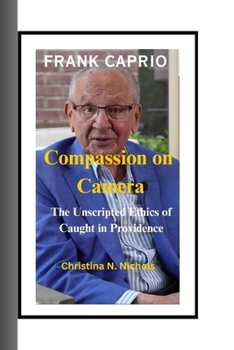
Compassion on Camera: The Unscripted Ethics of Caught in Providence

INTRODUCTION
Compassion on Camera: The Unscripted Ethics of Caught in Providence
In a world where justice often appears cold, procedural, and distant, Caught in Providence offered something different-something quietly revolutionary. Judge Frank Caprio, in his small municipal courtroom in Providence, Rhode Island, didn't just enforce the law. He listened. He paused. He cared. And the world noticed.
Millions of viewers from around the globe were drawn not by drama or scandal, but by something far more rare: the simple, powerful act of human empathy unfolding in real time. A single mother struggling to pay parking tickets, a nervous teenager learning a life lesson, a veteran trying to get back on his feet-these weren't just court cases. They were unscripted portraits of humanity.
This book, Compassion on Camera: The Unscripted Ethics of Caught in Providence, is an exploration of those moments and the ethical questions they raise-not behind closed doors, but in front of rolling cameras watched by millions. It is a journey into a unique courtroom that challenges our assumptions about justice, fairness, and what it means to truly serve the public.
At a glance, Judge Caprio's approach may seem soft in a system built on strict rules and unwavering codes. Yet what emerges from his courtroom is not weakness-it is wisdom. He understands that justice is not one-size-fits-all. Each person who stands before him carries a story, and within each story lies a deeper truth: poverty, trauma, love, loss, resilience, hope. Rather than silencing those stories in favor of efficiency or rigid formality, Judge Caprio invites them in. He listens not only to what the law says but to what the moment calls for. And in doing so, he reminds us that compassion is not the opposite of justice-it is part of it.
This book delves into the powerful intersection of law and humanity. It examines how Caught in Providence became a global phenomenon-not through high-stakes legal battles or sensational trials, but through moments of humility, mercy, and respect. It investigates how and why the show touched millions of hearts, sparking conversations about what justice should look like in the real world.
But this isn't just a celebration of one man's work. It's also a deep, thoughtful reflection on the unscripted ethics behind the camera. What does it mean to show real people's struggles to the public? Can a televised courtroom preserve dignity while also providing transparency? Where is the line between storytelling and exploitation? Through these questions, the book challenges readers to think critically about the media's role in shaping public perception-and whether visibility always serves the public good.
Drawing from real cases and courtroom moments, Compassion on Camera unpacks the complex dynamics of judgment, forgiveness, and responsibility. It reveals how moments that might appear small-a smile, a kind word, a waived fine-can carry immense moral weight. It shows how empathy, when practiced sincerely, can be a guiding force not just in law, but in everyday life.
More than anything, this book serves as a timely call to remember our shared humanity. In an age of division, where people are often reduced to statistics, posts, or headlines, Caught in Providence reminds us that every face in the courtroom belongs to a person with fears, hopes, and histories. And it invites us to reconsider how we approach not only justice, but each other.
As you read these pages, you'll revisit unforgettable moments from the show-some heartwarming, some heartbreaking, all profoundly real. You'll learn about Judge Caprio's philosophy, the roots of his compassion, and the deep sense of civic duty that guides his every decision.
Customer Reviews
ThriftBooks ® and the ThriftBooks ® logo are registered trademarks of Thrift Books Global, LLC
