


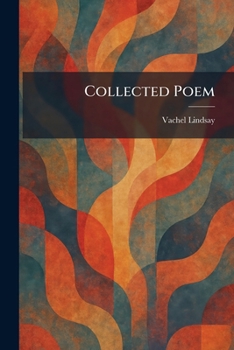
Collected Poem

"Collected Poem" showcases the visionary and rhythmic power of one of America's most unique literary voices, Vachel Lindsay. A central figure in the early 20th-century poetry movement, Lindsay is celebrated for his "singing" style, which sought to return verse to its oral and musical roots. This collection brings together a wide array of his works, illustrating his mastery of cadence and his deep connection to the American spirit.
The poems within this volume explore themes ranging from religious fervor and social reform to the mythology of the American landscape. Lindsay's work is characterized by its bold use of repetition and sound, creating a performance-like quality that captures the energy of the era. From the rhythmic intensity of pieces inspired by jazz and gospel to quiet reflections on nature and folklore, the collection offers a comprehensive look at an artist who defied conventional poetic structures.
As an essential compilation of modernist verse, "Collected Poem" remains a vital study in the intersection of populist art and high literature. It provides readers with a vivid window into the cultural and spiritual anxieties of early 20th-century America, delivered through the unforgettable voice of a poet who believed in the transformative power of the spoken word.
This work has been selected by scholars as being culturally important, and is part of the knowledge base of civilization as we know it. This work was reproduced from the original artifact, and remains as true to the original work as possible. Therefore, you may see the original copyright references, library stamps (as most of these works have been housed in our most important libraries around the world), and other notations in the work.
This work is in the public domain in the United States of America, and possibly other nations. Within the United States, you may freely copy and distribute this work, as no entity (individual or corporate) has a copyright on the body of the work.
As a reproduction of a historical artifact, this work may contain missing or blurred pages, poor pictures, errant marks, etc. Scholars believe, and we concur, that this work is important enough to be preserved, reproduced, and made generally available to the public. We appreciate your support of the preservation process, and thank you for being an important part of keeping this knowledge alive and relevant.
Customer Reviews
ThriftBooks ® and the ThriftBooks ® logo are registered trademarks of Thrift Books Global, LLC
