


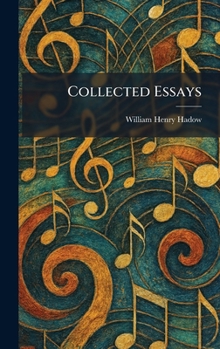
Collected Essays

"Collected Essays" is a profound compilation of writings by the esteemed musicologist and educator Sir William Henry Hadow. This collection brings together Hadow's insightful reflections on the nature of music, its history, and its role within society. Spanning a wide array of topics, the volume delves into the aesthetics of musical composition, the development of the classical tradition, and the critical evaluation of legendary composers.
Hadow's prose is characterized by its clarity and intellectual rigor, offering readers a window into the evolution of musical thought during the late 19th and early 20th centuries. Beyond pure musicology, the essays often touch upon the intersections of art and education, reflecting Hadow's influential career as a scholar and administrator. This anthology serves as a vital resource for anyone interested in the philosophy of music and the historical perspectives that shaped modern appreciation for the art form. Whether examining the intricacies of symphonic structure or the broader cultural impact of music, "Collected Essays" remains a testament to Hadow's enduring legacy as one of the preeminent voices in British musical scholarship.
This work has been selected by scholars as being culturally important, and is part of the knowledge base of civilization as we know it. This work was reproduced from the original artifact, and remains as true to the original work as possible. Therefore, you may see the original copyright references, library stamps (as most of these works have been housed in our most important libraries around the world), and other notations in the work.
This work is in the public domain in the United States of America, and possibly other nations. Within the United States, you may freely copy and distribute this work, as no entity (individual or corporate) has a copyright on the body of the work.
As a reproduction of a historical artifact, this work may contain missing or blurred pages, poor pictures, errant marks, etc. Scholars believe, and we concur, that this work is important enough to be preserved, reproduced, and made generally available to the public. We appreciate your support of the preservation process, and thank you for being an important part of keeping this knowledge alive and relevant.
Customer Reviews
ThriftBooks ® and the ThriftBooks ® logo are registered trademarks of Thrift Books Global, LLC
