


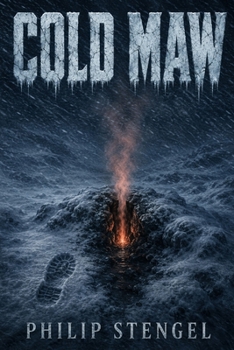
Cold Maw
No Customer Reviews

Select Format
Select Condition 
Book Overview
The outpost went silent in the storm. Something inside it was still hungry. Deep in the Alaska winter, on a stretch of the Kenai Peninsula where the maps run out of names and the nearest help is a day of bad road away, a small research station stops answering its radio. Dr. Evelyn Harrow flies in expecting a dead generator and a case of frostbite. Instead she finds blood frozen black on the snow, a steel door peeled off its frame, and a cold that does not move the way cold is supposed to move. The team is gone. Whatever emptied the station is not. The old people on the peninsula have a word for what wakes in the lean years, though they do not like to say it out loud. They call it the Maw. It does not roar and it does not chase. It waits for a winter thin enough to loosen it from the ground, and then it speaks. It speaks in a voice you trust, a voice you have loved, and it asks, very gently, to be let inside. The people it takes do not die. They change. Their nails darken and thicken toward claws. Their breath stops fogging in the freezing air. Hard knots rise at their temples like the buds of antlers, and under all of it they begin to hear the same patient whisper, the one that swears the hunger will finally stop if they feed it only once. The change is slow enough to hide and fast enough to drown in. First the people around you start to smell rich and interesting. Then the guilt burns off like breath on glass. Then there is only appetite, wearing your face and answering to your name. Everyone who breathes that cold too long begins to hear it. Even the woman sent to help. Then the storm closes every road, and there is nowhere left to run. The Maw moves from the outpost to the town that quietly kept it fed, and from there toward the village of Nikiski, where a guide named Lena Kivaluk already carries its mark in a shoulder wound that will not close. She has heard the whisper. She knows what is coming for the people she loves, because part of it is already coming for her. Fire only slows the thing down. Nothing anyone tries kills it clean. The village remembers the last time. There is a clearing on the peninsula where the snow will not settle and the earth never freezes, ringed by stones an older people carved with warnings no one living can fully read. Their record says the Maw does not die when you kill its mouth. It sinks back into the warm dark it keeps beneath the frost, and it waits for a colder season and a hungrier year to try again. To truly end it, someone has to understand the one line that record repeats across a hundred winters of frostbitten ink and dead handwriting. You cannot burn a hunger out of the world. You have to starve it. And it has learned to wear the voices of the dead so the living will keep opening the door. By the time the survivors grasp what they are actually fighting, it is already inside the walls, already wearing a familiar face, already calling out for help in a voice that belonged to someone they buried. COLD MAW is a novel of creature horror and body horror set in the long dark of the far north, where the monster is old and patient and the survivors are tired, frightened, ordinary people pushed toward the unthinkable to see one more morning. It is a story about the cruelty of the cold, the true cost of staying alive, and the terrible mercy of a voice that sounds exactly like someone you lost. If you like your horror cold and patient, physical and folkloric, the kind that burrows in and stays, come north. Bar the door. Bank the fire. Read it warm. Because the winter is long, the pantry is already thin, and something out in the snow has learned to call your name in a voice you will want to answer.
Format:Paperback
Language:English
ISBN:B0F6D45P51
ISBN13:9798281283472
Release Date:April 2025
Publisher:Independently Published
Length:402 Pages
Weight:1.07 lbs.
Dimensions:1.0" x 6.0" x 9.0"
Customer Reviews
0 rating
Copyright © 2026 Thriftbooks.com
Terms of Use | Privacy Policy | Do Not Sell/Share My Personal Information | Cookie Policy | Cookie Preferences | Accessibility Statement
ThriftBooks ® and the ThriftBooks ® logo are registered trademarks of Thrift Books Global, LLC
ThriftBooks ® and the ThriftBooks ® logo are registered trademarks of Thrift Books Global, LLC
